
PIC Math Case Study Videos
In the NSF-funded Preparation for Industrial Careers in Mathematics (PIC Math) program, faculty learned to make connections with business, industry, and government partners and mentor teams of students who worked on real-world problems coming from the partners. As part of the initiative, the PIC Math Industrial Mathematics Case Study Videos were created. These paired videos feature industry professionals describing real-world problems alongside faculty explaining the underlying mathematics and possible approaches.
Mathematics. You can count on it.
The applications of math are everywhere, and a strong skillset in mathematical sciences isn't only good for your future - it can help solve major world problems. That leads to a better career for you... and a better tomorrow for us all.
We present 4 two-video sequences highlighting some research problems that mathematicians and statisticians encounter outside of academia. The first video in each sequence features a professional mathematical scientist talking about their career and some of their research. The second video in the sequence features a faculty member presenting some technical background and an approach that one may use to make progress on the industrial research problem.

Improving Market Strategies
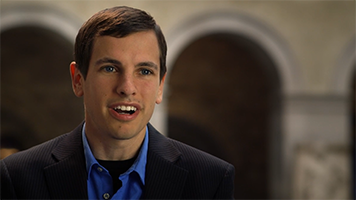
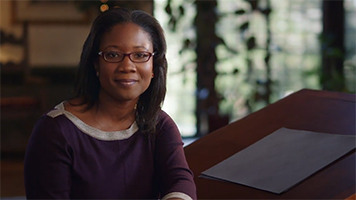
Dr. Jonathan Adler (winner of King of the Nerds Season 3) talks about his career path and about a specific research problem that he has worked on. Using text analytics he was able to help an online company distinguish between its business customers and its private consumers from gift card messages. Prof. Talithia Williams of Harvey Mudd College explains the statistical techniques that can be used to classify customers of a company using the messages on their gift cards.
Improving Market Strategies: Segment I
Improving Market Strategies: Segment II

Creating More Realistic Animation for Movies
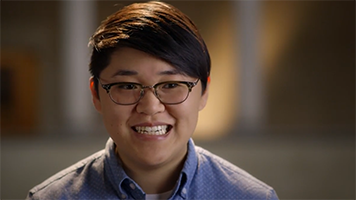
Dr. Alex McAdams, Senior Software Engineer at Walt Disney Animation Studios, talks about how mathematics is used to make realistic, yet art directable, animations. Prof. Joseph Teran of the Department of Mathematics at UCLA gives an overview of the numerical linear algebra and iterative method techniques that are used to simulate physical phenomena such as water, fire, smoke, and elastic deformations in the movie and gaming industries.
Creating More Realistic Animation for Movies: Segment I
Creating More Realistic Animation for Movies: Segment II
Building a Better Filter
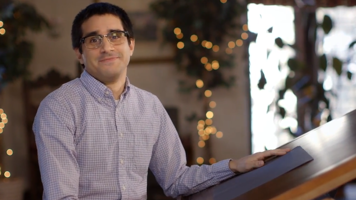
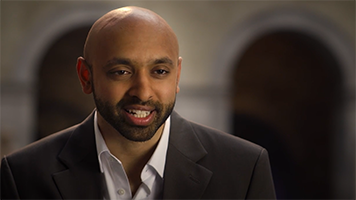
Dr. Sumanth Swaminathan of W. L. Gore & Associates talks about his career path and the research questions about filtration that he considers. He works to understand the different waste capture mechanisms of filtration devices and to mathematically optimize the microstructure to create better filters. Prof. Louis Rossi of the Department of Mathematical Sciences of the University of Delaware presents two introductory mathematical models that one can use to understand and characterize filters and the filtration processes.
Building a Better Filter: Segment I
Building a Better Filter: Segment II
Finding the Safest Place to Store Nuclear Waste
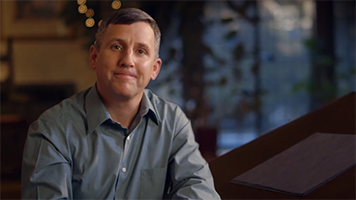
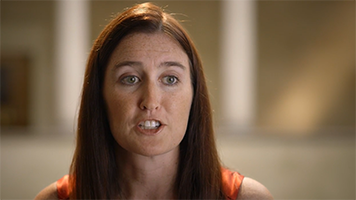
Dr. Genetha Gray talks about her path and about a research problem that she worked on at Sandia National Laboratories. Using quite limited geological data, they had to create a groundwater flow computational model, with parameters to be determined, so that they could study the feasibility and safety of prospective subsurface nuclear waste storage sites. Prof. Gwen Spencer of Smith College introduces the mathematics behind optimization, calibration, and the quantification of uncertainty in models and in the results that they give.
Finding the Safest Place to Store Nuclear Waste: Segment I
Finding the Safest Place to Store Nuclear Waste: Segment II
Contact Us
Questions about SIAM programs? Get in touch with our staff.
Contact SIAM Programs StaffStay Up-to-Date with Email Alerts
Sign up for our monthly newsletter and emails about other topics of your choosing.