
SIAM Announces 2026 Class of Fellows
Society for Industrial and Applied Mathematics (SIAM) is pleased to announce the 2026 Class of SIAM Fellows. These distinguished members were nominated in recognition of their outstanding research and service to the community. Through their various contributions, SIAM Fellows form a crucial group of individuals helping to advance the fields of applied mathematics, computational science, and data science.
SIAM congratulates these 25 esteemed members of the community, listed below in alphabetical order. They will be recognized during a reception at the 2026 SIAM Annual Meeting in Cleveland, Ohio, U.S. in July 2026. View the full list of SIAM Fellows and learn more about SIAM prizes and awards.
Nominations for 2027 Fellows will open May 1, 2026. Learn more about our nomination procedures.
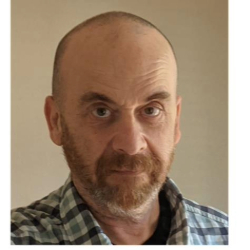
Kenneth L. Clarkson, IBM Research, is being recognized for seminal contributions to randomized computational geometry and numerical linear algebra; advanced scalable matrix algorithms; and mentored researchers bridging theory and applications.
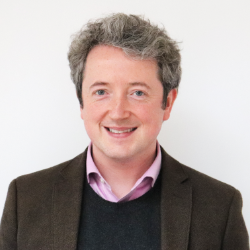
Patrick Farrell, University of Oxford and Charles University, is being recognized for contributions to algorithms and software for the numerical solution of partial differential equations.
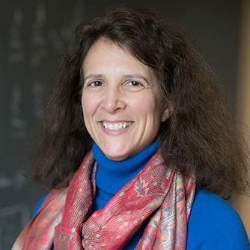
Anne Gelb, Dartmouth College, is being recognized for contributions to high-order accurate computational methods for conservation laws and advanced signal and image analysis.
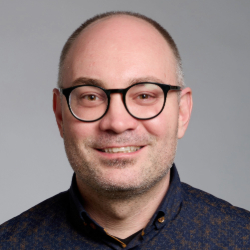
Stefan Güttel, The University of Manchester, is being recognized for research contributions to applied and numerical linear algebra with outstanding industrial impact.
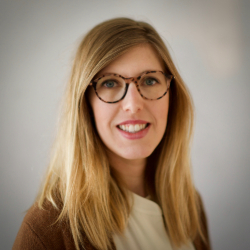
Heather A. Harrington, Max Planck Institute of Molecular Cell Biology and Genetics, University of Oxford, and Dresden University of Technology, is being recognized for outstanding contributions to the development of new topological and algebraic methods and their applications to mathematical biology.

Fred J. Hickernell, Illinois Institute of Technology, is being recognized for path-breaking contributions to the analysis of high-dimensional integration and approximation and for outstanding scientific leadership.
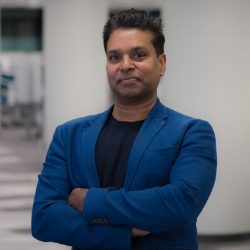
Sebastian Jaimungal, University of Toronto, is being recognized for contributions to stochastic control, mathematical finance and insurance, and for distinguished service to the scientific community.
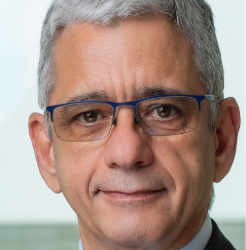
Omar Knio, King Abdullah University of Science and Technology, is being recognized for leadership in uncertainty quantification and multiscale mathematics with applications to combustion, energetic materials, and geophysical fluid dynamics.
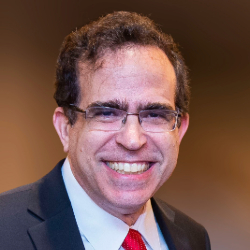
Doron Levy, University of Maryland, is being recognized for stellar contributions to research and training in mathematical oncology and mathematical biology.
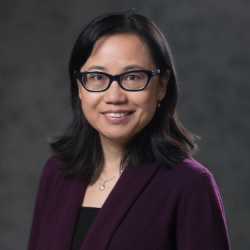
Fengyan Li, Rensselaer Polytechnic Institute, is being recognized for contributions to structure-preserving discontinuous Galerkin methods and other schemes for hyperbolic equations, and for professional services including those to SIAM and women in mathematics.
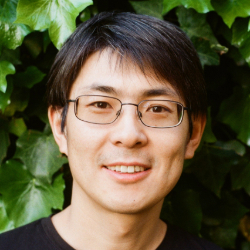
Lin Lin, University of California, Berkeley, and Lawrence Berkeley National Laboratory, is being recognized for contributions to numerical analysis, new methods, and software for solving electronic structure problems in computational chemistry and materials sciences.
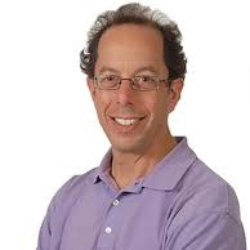
John Lowengrub, Center for Complex Biological Systems, Chao Family Comprehensive Cancer Center, University of California, Irvine, is being recognized for seminal contributions to mathematical modeling, theory and computation of multiphase flows, complex materials, and biological tissues.
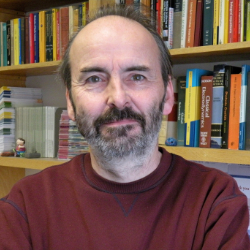
Paul A. Martin, Colorado School of Mines, is being recognized for seminal contributions to the theory and applications of integral equations and wave scattering and for outstanding service to applied mathematics.
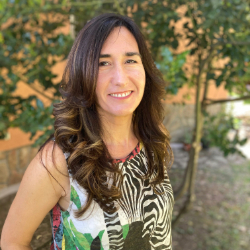
Sonia Martinez, University of California, San Diego, is being recognized for fundamental contributions to the theory of multi-agent and robotic systems with applications to distributed control, sensing, and estimation.

Peter David Miller, University of Michigan, is being recognized for contributions to nonlinear waves, Riemann-Hilbert problems, and the nonlinear Schroedinger equation.
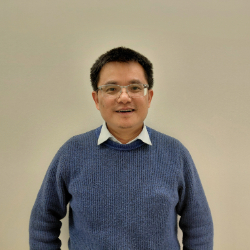
Jiawang Nie, University of California, San Diego, is being recognized for contributions to optimization, tensor computation, truncated moment problems, and convex algebraic geometry.
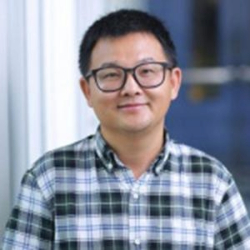
Kui Ren, Columbia University, is being recognized for contributions to computational and mathematical analysis of inverse problems and their applications in imaging sciences.
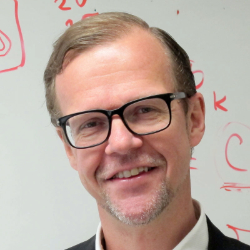
Erkki Somersalo, Case Western Reserve University, is being recognized for contributions in applied and computational mathematics, including electromagnetism, Bayesian inverse problems, uncertainty quantification, data science, and mathematical modeling.
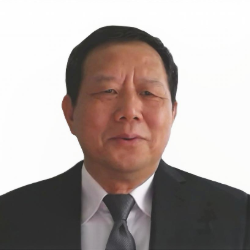
Xue-Cheng Tai, Norwegian Research Centre, is being recognized for his contributions to the convergence analysis of numerical models, the development of numerical methods and the application of fast numerical algorithms in image processing, particularly involving methods based on partial differential equations.
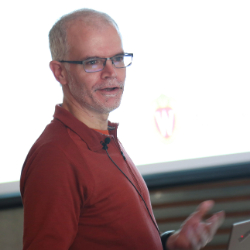
Jean-Luc Thiffeault, University of Wisconsin–Madison, is being recognized for many inventive approaches to the modeling and characterization of mixing, chaotic and complex flows, microorganism transport, braids, and dynamical systems.
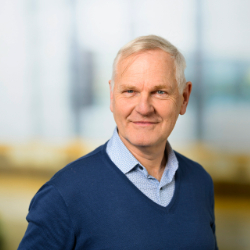
Cornelis Vuik, Delft University of Technology, is being recognized for contributions to the development and analysis of iterative solution methods and large-scale modeling and simulation throughout science and engineering.
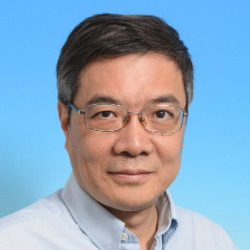
Xiaoping Wang, The Chinese University of Hong Kong, Shenzhen, is being recognized for his significant contributions in multiphase flow modeling and simulations, micromagnetic simulations, adaptive mesh method and topology optimization.
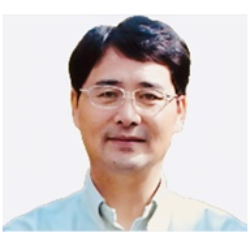
Guowei Wei, Michigan State University, is being recognized for pioneering contributions in mathematical molecular biosciences, mathematical virology, and topological deep learning.
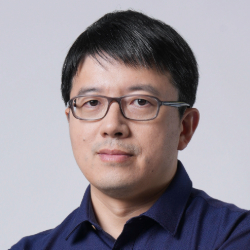
Wotao Yin, Decision Intelligence Lab, DAMO Academy, Alibaba Group US Inc, is being recognized for contributions to operator splitting, parallel and distributed computing, compressed sensing, and variational image processing spanning theory, algorithms, and code development.
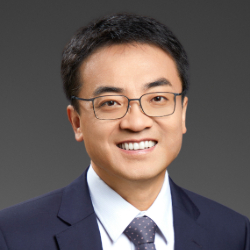
Tao Zhou, Academy of Mathematics and Systems Science, Chinese Academy of Sciences, is being recognized for his significant contributions to uncertainty quantification and scientific computing.
In addition to raising the visibility of applied mathematics, computational science, and data science, the SIAM Fellows Program enhances the prospects of SIAM members for receiving awards and honors, and securing leadership positions in the broader society. Learn more about the SIAM Fellows Program.
Related Reading

Stay Up-to-Date with Email Alerts
Sign up for our monthly newsletter and emails about other topics of your choosing.