
2026 March Prize Spotlight
Congratulations to SIAM prize recipient, Nora Lüthen, who will be recognized at the 2026 SIAM Conference on Uncertainty Quantification (UQ26), taking place on March 22-25, 2026 in Minneapolis, Minnesota.
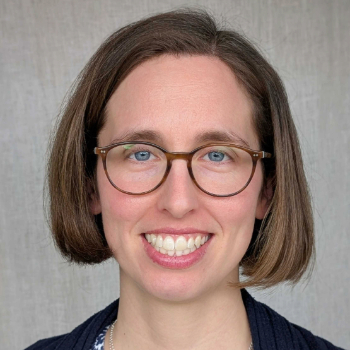
Dr. Nora Lüthen, ETH Zürich, is the recipient of the 2026 SIAM Activity Group on Uncertainty Quantification Early Career Prize. Dr. Lüthen received the award “for tackling the challenging problem of constructing surrogate models for stochastic simulators.” She will deliver a prize lecture at SIAM UQ26 on Monday, March 23 titled, “Surrogate Modeling for Stochastic Simulators: A Trajectory-based Spectral Approach.”
The SIAM Activity Group on Uncertainty Quantification Early Career Prize is awarded every two years to one individual in their early career for outstanding research contributions in the field of uncertainty quantification in the three calendar years prior to the award year.
Dr. Lüthen is an established researcher at the Chair of Risk, Safety, and Uncertainty Quantification at ETH Zürich. Having previously obtained her M.Sc. in mathematics from the University of Bonn, she earned her Ph.D. from ETH Zürich in 2022 with a dissertation on sparse spectral surrogate models for deterministic and stochastic computer simulations.
Dr. Lüthen’s research focuses on the development of sparse chaos expansions and related surrogate modeling techniques for efficient uncertainty quantification in computationally expensive deterministic and stochastic systems. A substantial part of her work is devoted to teaching engineering students in programming, scientific computing, and uncertainty quantification. She is particularly committed to providing students with the mathematical and computational foundations needed to develop reliable, uncertainty-aware simulation models. Learn more about Dr. Lüthen.
Q: Why are you excited to receive the award?
A: Receiving the SIAM Activity Group on Uncertainty Quantification Early Career Prize is a profound honor. After a period of limited travel due to professional and personal commitments, I am particularly excited that this recognition brings me to the 2026 SIAM Conference on Uncertainty Quantification. It offers a wonderful opportunity to present my research to a broad audience and to finally meet in person colleagues and fellow researchers whom I so far have only followed through their publications.
Q: What does your work mean to the public?
A: Today, many of the systems that shape our lives such as energy networks, buildings, transportation systems, and medical devices are designed and operated using complex computer simulations, yet these models often take an impractical amount of time to run. If a single simulation takes days to complete, we can only afford to test a few scenarios, which leaves us blind to many potential risks. My research on surrogate modeling is about creating mathematical shortcuts. We develop methods that learn from a few expensive simulations to create a fast, accurate approximation: the surrogate. With this tool, scientists and engineers can explore thousands of what-if scenarios in seconds rather than months. Whether it’s improving the reliability of wind turbines or predicting the spread of a disease, my work provides the computational speed needed to account for real-world uncertainty. This ensures that the systems society depends on are tested against a vast range of possibilities, not just the best-case scenario.
Q: Could you tell us about the research that won you the award?
A: Many computational models are prohibitively expensive to run the thousands of times required for uncertainty analysis. My research focuses on surrogate modeling, which replaces these costly simulations with computationally efficient approximations. Specifically, at the Chair of Risk, Safety and Uncertainty Quantification at ETH Zürich, we work on so-called stochastic simulators, which are models that feature intrinsic randomness. Such models can be found in wind turbine design and earthquake engineering, where the inputs are stochastic turbulent wind fields or ground motions. Beyond engineering, they also appear in fields such as epidemiology (e.g., SIR models) and mathematical finance.
In our paper, "A spectral surrogate model for stochastic simulators computed from trajectory samples," we introduced a novel surrogate modeling method for such models utilizing polynomial chaos expansions, Karhunen-Loève expansions, and copula theory. In an earlier project, I have worked on identifying the most efficient sparse solvers for regression-based polynomial chaos expansions. This research led to a widely cited literature survey and benchmark paper, as well as in several extensions and a new benchmarking module for UQLab, the uncertainty quantification framework developed at ETH Zürich.
Q: What does being a member of SIAM mean to you?
A: I highly appreciate the role that scientific societies like SIAM and GAMM play in bringing researchers together and providing a platform for professional exchange. These organizations provide the essential support that early career researchers need to connect with the wider field. Being part of this network means participating in the shared effort of moving the field of uncertainty quantification forward.
Interested in submitting a nomination for the SIAM Activity Group on Uncertainty Quantification Early Career Prize? The prize next opens for nominations on March 1, 2027.
Related Reading

Stay Up-to-Date with Email Alerts
Sign up for our monthly newsletter and emails about other topics of your choosing.