
2026 May Prize Spotlight
Congratulations to the following SIAM prize recipients, who will be recognized at the 2026 SIAM Conference on Nonlinear Waves and Coherent Structures (NWCS26), taking place May 26-29, 2026, in Montréal, Québec, Canada, and at the 2026 SIAM Conference on Optimization (OP26), taking place June 2-5, 2026, in Edinburgh, United Kingdom.
- Robert Jenkins - T. Brooke Benjamin Prize
- Nicolas Boumal and Andrew McRae - SIAM Activity Group on Optimization Best Paper Prize
- Jason Altschuler - SIAM Activity Group on Optimization Early Career Prize
- Lorenz Biegler and Andreas Wächter - SIAM Activity Group on Optimization Test of Time Award
Robert Jenkins
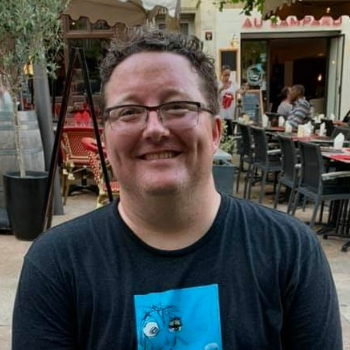
Dr. Robert Jenkins, University of Central Florida, is the recipient of the 2026 T. Brooke Benjamin Prize in Nonlinear Waves. Dr. Jenkins received the award for “his fundamental and influential contributions to the long-time asymptotic analysis of integrable dispersive partial differential equations.” He will deliver a prize lecture at the 2026 SIAM Conference on Nonlinear Waves and Coherent Structures on Thursday, May 28 titled, “Soliton-Resolution and Long-Time Asymptotic Results for Integrable Dispersive Nonlinear PDEs.”
The SIAM Activity Group on Nonlinear Waves and Coherent Structures awards the T. Brooke Benjamin Prize every two years to one mid-career established researcher for recent outstanding work on a topic in nonlinear waves, as evidenced by a body of work with at least one significant publication in English in a peer-reviewed journal within the four calendar years preceding the award year.
Dr. Jenkins earned his Ph.D. in applied math from the University of Arizona in 2009. His dissertation, under the supervision of Professor Ken McLaughlin, was on the "Semiclassical asymptotics of the focusing nonlinear Schrödinger equation for square barrier initial data." Dr. Jenkins was a postdoc at the University of Michigan (2009-2012), the International School for Advanced Studies (2012-2014), the University of Arizona (2014-2018), and Colorado State University (2018-2019). He has been a member of the math department at the University of Central Florida since 2019, where he is currently an associate professor. His research focuses on integrable dispersive partial differential equations (PDEs). Dr. Jenkins has been a SIAM member for 6 years.
Q: Why are you excited to receive the award?
A: I'm still in a bit disbelief, to be honest. It's very special to be recognized by the SIAM Activity Group on Nonlinear Waves and Coherent Structures for my own contributions to the field. The previous winners of this award are all fantastic mathematicians. It's both humbling and inspiring to be included in this group. The prize motivates me to continue my research in the field and see what discoveries we can make.
Q: What does your work mean to the public?
A: Integrable PDEs, like the nonlinear Schrödinger equation and Korteweg de Vries, though highly idealized, are fundamental models of weakly nonlinear dynamics which arise from very generic modeling assumptions. In applications like nonlinear optics, the weakly nonlinear parameter regime is quite natural where one wants to take advantage of nonlinear effects to engineer more efficient devices. My own work on semiclassical and long-time limits of these equations explores the behavior of these systems as the modeling assumptions one uses to arrive at them break down. By studying these equations in extreme parameter regimes, we learn about the transition from linear to fully nonlinear dynamics in real world problems.
Q: Could you tell us about the research that won you the award?
A: My research focuses on describing the limiting behavior of integrable PDEs in different asymptotic regimes. One aspect of this work has been studying the long-time behavior of various integrable dispersive PDEs, particularly as it relates to the soliton resolution conjecture. This conjecture is a very general claim that generic solutions of any dispersive PDE on the real line will decouple at large time into a superposition of solitons—localized coherent traveling waves—and a radiative component which decays in time. Using integrability, we've been able to prove soliton resolution for various integrable PDEs and describe the large time behavior in exacting detail.
Q: What does being a member of SIAM mean to you?
A: SIAM is the first academic society I was ever a member of, as part of a student chapter, and has been a constant in my career. The 2026 SIAM Conference on Nonlinear Waves and Coherent Structures is a can't miss event and SIAM's journals are a reliable source of inspiring research.
Interested in submitting a nomination for the T. Brooke Benjamin Prize? The prize next opens for nominations on May 1, 2027.
Nicolas Boumal and Andrew McRae
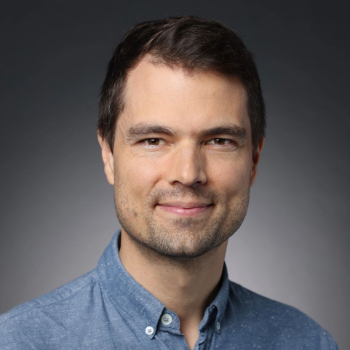
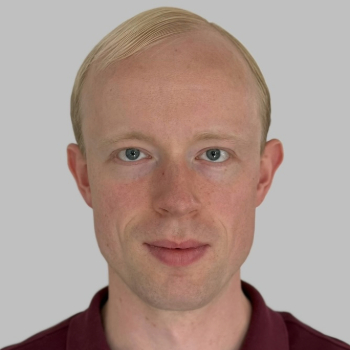
Dr. Nicolas Boumal, École Polytechnique Fédérale de Lausanne (EPFL) and Dr. Andrew D. McRae, École nationale des ponts et chaussées (ENPC), are the recipients of the 2026 SIAM Activity Group on Optimization Best Paper Prize. The pair received the award for their paper, “Benign Landscapes of Low-Dimensional Relaxations for Orthogonal Synchronization on General Graphs", that provides rigorous theoretical guarantees for the low-dimensional relaxations of synchronization problems used in practical applications. Dr. McRae will present the paper at the 2026 SIAM Conference on Optimization on Thursday, June 4.
The SIAM Activity Group on Optimization Best Paper Prize is awarded every three years to the author(s) of the most outstanding paper, as determined by the prize committee, on a topic in optimization published in the four calendar years preceding the award year.
Dr. Nicolas Boumal is an associate professor at EPFL, associate editor for Mathematical Programming, and contributor to the blog of the continuous optimization group at EPFL. He studies continuous optimization, with a focus on nonconvexity and geometric structure. Much of his work is on the theory of algorithms and applications. On the software side, he develops the Manopt toolbox for optimization on manifolds. Dr. Boumal has been a SIAM member for 15 years and is Chair of the SIAM Activity Group on Optimization Early Career Prize selection committee. Learn more about Dr. Boumal.
Dr. Andrew D. McRae works with the CERMICS research group at ENPC. Previously, he was a doctoral student at Georgia Tech in electrical and computer engineering and a postdoc at EPFL in mathematics. His research is on the theory of continuous optimization in the context of high-dimensional statistics, particularly how application-specific problem structure affects the difficulty of solving the associated optimization problems. Applications of his work include problems in imaging, robotics, sensor networks, dynamical systems, and graph theory. Learn more about Dr. McRae.
Q: Why are you all excited to receive the award?
A: This work was the culmination of a long line of work and conversations and has been a building block for much follow-up research. In addition, this work belongs to two distinct areas of applied mathematics and resolves an open question that was separately posed in quite different language in both areas. Hence, this research was very satisfying for us, and we are happy and honored that the SIAM Activity Group on Optimization has found it worthy of the Best Paper Prize.
From an optimization perspective, along with Afonso Bandeira and Vlad Voroninski, Dr. Boumal had studied a simpler version of this problem ten years ago. However, researchers in the robotics community noted that the algorithmic approach we study worked well in practice in ways that this earlier work and other existing theory could not explain; Dave Rosen told us about this observation and has, with his collaborators, worked on this problem in a very practical manner. Our work almost perfectly explains their empirical observations.
In addition, our work has an interpretation from a dynamical systems and control theory perspective; in particular, the optimization landscape that originally motivated us has a fundamental connection to a famous dynamical system called the “Kuramoto oscillator.” From this perspective, our result turned out to perfectly resolve an open question posed in this area by Johan Markdahl, Johan Thunberg, and Jorge Goncalves.
Finally, the mathematical tools we developed in this work have served as a building block for other excellent research by Shuyang Ling, Faniriana Rakoto Endor, and Irène Waldspurger, as well as our own more recent work with collaborators such as Pedro Abdalla, Afonso Bandeira, Chris Criscitiello, and Quentin Rebjock.
Q: Could you tell us about the research that won your team the award?
A: This work studies orthogonal group synchronization, where we want to estimate a collection of orthogonal (e.g., rotation) matrices from a set of pairwise differences (e.g., relative rotations). A natural estimator is the solution to a nonconvex—and hence computationally challenging—optimization problem. Convex relaxations work well but approximately square the number of variables, making computation expensive for large problems. We show theoretically that a nonconvex relaxation that only slightly increases the size of the optimization problem is sufficient, giving the nonconvex problem a benign landscape: all second-order critical points are globally optimal.
Q: What does your team's work mean to the public?
A: Orthogonal group synchronization is a critical problem in many applications, including robotics for Simultaneous Localization and Mapping (SLAM), computer vision, and community detection. Our work both inspires and provides theoretical grounding for scalable, computationally efficient algorithms in these domains. In some cases, such as SLAM, these algorithms already exist, and our work helps explain why they work so well in practice!
Interested in submitting a nomination for the SIAM Activity Group on Optimization Best Paper Prize? The prize next opens for nominations on May 1, 2028.
Jason Altschuler
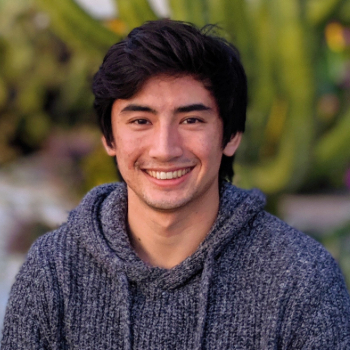
Dr. Jason Altschuler, University of Pennsylvania, is the recipient of the 2026 SIAM Activity Group on Optimization Early Career Prize. Dr. Altschuler received the award for “his seminal contributions both in optimization and in other fields through optimization, marked by the development of elegant ideas which will spark many more breakthroughs.” He will deliver a prize lecture at the 2026 SIAM Conference on Optimization on Thursday, June 4 titled, “Seminal Contributions Both in Optimization and in Other Fields Through Optimization.”
The SIAM Activity Group on Optimization Early Career Prize is awarded every three years to an outstanding early career researcher in the field of optimization for distinguished contributions to the field in the six calendar years prior to the award year.
Dr. Altschuler is an assistant professor at the University of Pennsylvania in the Department of Statistics and Data Science, and by courtesy, the Departments of Computer Science, Electrical Engineering, and Applied Mathematics. He received his undergraduate degree from Princeton University and his Ph.D. from the Massachusetts Institute of Technology (MIT). His research interests lie at the interface of optimization, probability, and machine learning, with a focus on the design and analysis of efficient algorithms.
Dr. Altschuler is the recipient of the Sloan Fellowship in Mathematics, the Air Force Office of Scientific Research Young Investigator Program Award in mathematical optimization, the INFORMS Computing Society Prize for the best papers at the interface of computer science and operations research, the MIT Sprowls Dissertation Award, the Mathematical Optimization Society’s Tucker Finalist Prize, and multiple Undergraduate Teaching Excellence awards. Learn more about Dr. Altschuler.
Q: Why are you excited to receive the award?
A: The optimization community is my academic home, so it’s wonderful to receive this recognition from it. I am grateful to my fantastic collaborators, mentors, and students who have taught me so much about this field and more.
Q: What does your work mean to the public?
A: Optimization is the engine driving modern engineering, data science, and AI. It provides both a mathematical formalism for decision making and an algorithmic framework for efficiently finding solutions. It is essential to develop optimization algorithms that are more efficient, accurate, and reliable. My work is motivated by these foundational questions.
Q: Could you tell us about the research that won you the award?
A: Optimization is both an extremely classical field in mathematics and a pressing modern discipline that drives high-impact engineering applications. Yet, despite incredible progress, many fundamental questions remain open. In classical optimization settings, questions such as how one should choose step sizes for gradient descent in convex optimization remain; and in broader optimization settings demanded by modern applications, questions such as how one should design algorithms for sampling or private machine learning also remain open. Other questions, thought to be solved decades ago, have re-emerged as active areas of research due to the unprecedented scale of modern data and computational platforms (e.g., how to solve optimal transportation at massive scale?). My work aims to answer some of these foundational questions.
Q: What does being a member of SIAM mean to you?
A: SIAM is a fantastic community for applied mathematicians, and I am grateful to be part of it. I learn so much from SIAM's journals and conferences.
Interested in submitting a nomination for the SIAM Activity Group on Optimization Early Career Prize? The prize next opens for nominations on May 1, 2028.
Lorenz Biegler and Andreas Wächter
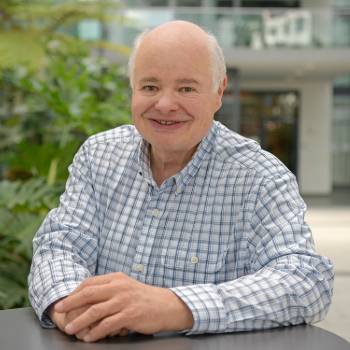
Dr. Lorenz Biegler, Carnegie Mellon University, and Dr. Andreas Wächter, Gurobi Optimization, are the recipients of the 2026 SIAM Activity Group on Optimization Test of Time Award. The pair received the award for their paper, "On the implementation of an interior-point filter line-search algorithm for large-scale nonlinear programming." Twenty years after its publication, the widely used algorithm described in this paper remains the most effective approach for solving general nonlinear optimization problems. Dr. Wächter will present the paper at the 2026 SIAM Conference on Optimization on Friday, June 5.
The SIAM Activity Group on Optimization Test of Time Award, established in 2022, is awarded every three years to an individual or group of researchers for an outstanding single piece of work that has had significant and sustained influence on the field of optimization over a time period of at least 10 years preceding the year of the award.
Dr. Lorenz Biegler is the Covestro University Professor of Chemical Engineering at Carnegie Mellon University. His research interests lie in computer aided process engineering and include flowsheet optimization, optimization of systems of differential and algebraic equations, reactor network synthesis, nonlinear process control, and real-time optimization. Contributions in these areas include analysis and development of nonlinear programming algorithms, optimization software design and application to real-world chemical processes and energy systems.
Dr. Biegler is an author of over 600 archival publications and two textbooks, editor of 11 technical books; he is also a lecturer who has delivered numerous presentations at national and international conferences. Recognitions for his work include the Lewis Award, Walker Award, and Computers in Chemical Engineering Award given by the American Institute of Chemical Engineers (AIChE); the Sargent Medal from the Institution of Chemical Engineering; the INFORMS Computing Prize; and an honorary doctorate in engineering sciences from the Technical University of Berlin. He has been a SIAM members for 36 years and is a 2014 SIAM Fellow, an AIChE Fellow, an International Federation of Automatic Control Fellow, and a National Academy of Engineering member. Learn more about Dr. Biegler.
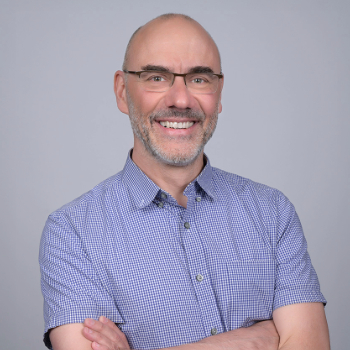
Dr. Andreas Wächter is a member of the development team for Gurobi’s optimization engine. His research focuses on the design and implementation of algorithms for nonlinear optimization. Before joining Gurobi, he served as a professor of industrial engineering at Northwestern University, following a decade at IBM Research. He earned his Ph.D. in chemical engineering from Carnegie Mellon University. Together with Larry Biegler, he received the James H. Wilkinson Prize for Numerical Software and the INFORMS Computing Society Prize for their work on the open-source optimization package Interior Point Optimizer (IPOPT). He has been a SIAM member for 26 years and is a 2021 SIAM Fellow.
Q: Why are you all excited to receive the award?
A: It is a true honor to receive this award. We are deeply grateful that our research has been recognized in this way and continues to support both researchers and practitioners in their work.
Q: Could you tell us about the research that won your team the award?
A: Our research focused on the development, analysis, and implementation of a practical and efficient interior-point algorithm for nonlinear optimization. It was largely motivated by challenging applications in the design and operation of chemical and energy processes, as well as related engineering problems. The paper recognized with this award presents the open-source implementation of this algorithm.
Q: What does your team's work mean to the public?
A: This work led to the widely used open-source package IPOPT, which has been applied to many real-world nonlinear optimization problems across a broad range of domains and has been integrated into several optimization modeling platforms.
Q: What does being members of SIAM mean to your team?
A: SIAM is a powerful forum that promotes the synergy of key developments in applied mathematics to challenging problems in science and engineering. Through its journals, conferences, and the community it cultivates, SIAM has been a tremendous resource for us.
Interested in submitting a nomination for the SIAM Activity Group on Optimization Test of Time Award? The prize next opens for nominations on May 1, 2028.
Related Reading

Stay Up-to-Date with Email Alerts
Sign up for our monthly newsletter and emails about other topics of your choosing.