
Applied Mathematics as Infrastructure for the Future of Artificial Intelligence
Recent breakthroughs in artificial intelligence (AI) have sparked extraordinary excitement, investment, and public attention. Much of the discussions surrounding these advancements are focused on data availability, computing scale, and the increase in sheer power these models hold. Yet as many SIAM members know well, these narratives tell only part of the story. Applied mathematics is central to the development of modern AI, from optimization and numerical linear algebra to probability, statistics, and dynamical systems, and it will be decisive in determining whether AI systems can be trusted, deployed, and sustained in the years ahead.
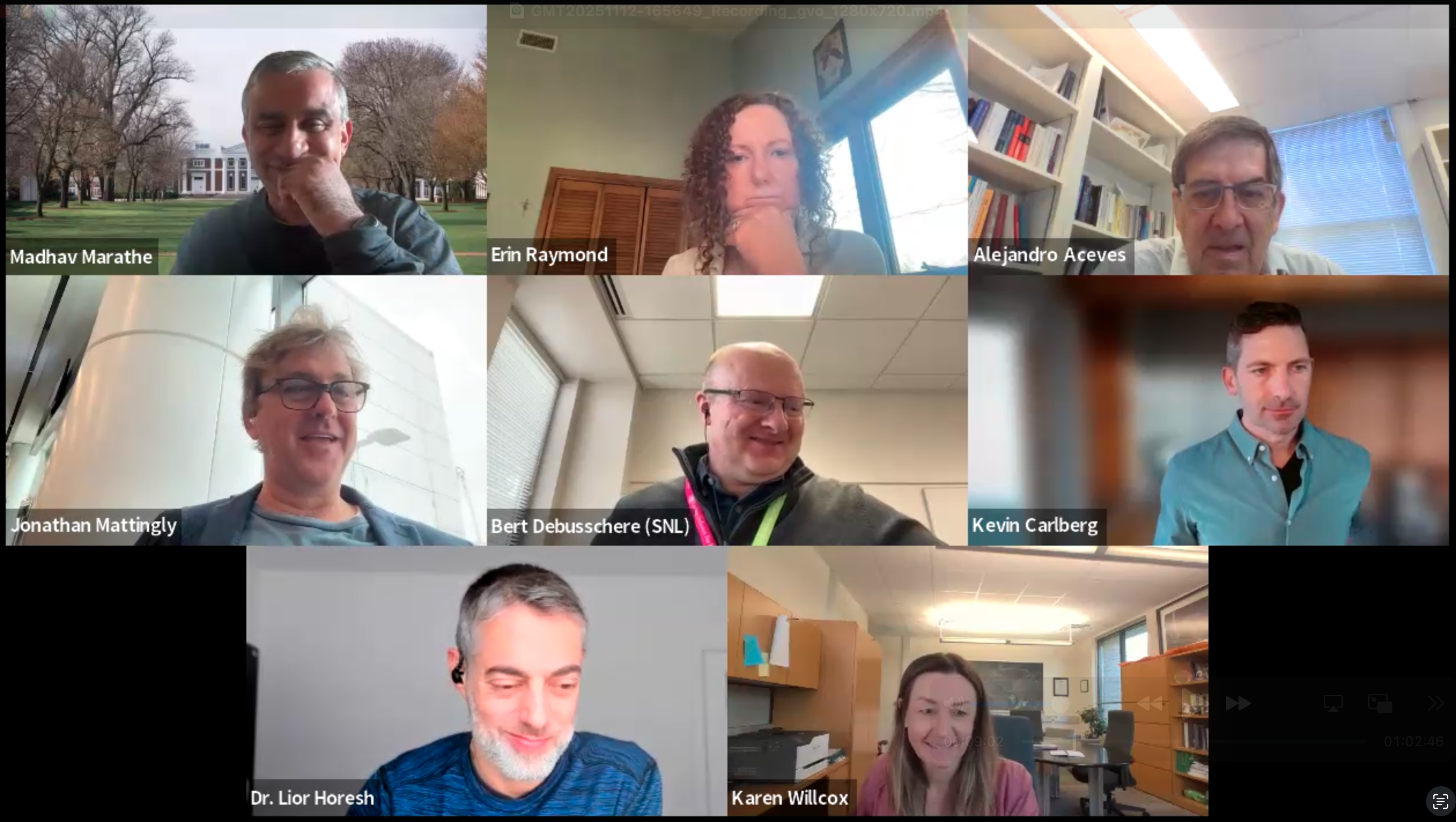
To address the rapid changes in AI, the SIAM AI Task Force developed “The Role of Applied Mathematics in a New Era of Artificial Intelligence,” a white paper examining the role of applied mathematics in the future of AI — particularly in high-consequence domains where reliability, safety, and accountability are essential. The report advances a simple but consequential point: applied mathematics is not merely a supporting tool for AI, but a form of intellectual infrastructure that AI systems require to mature from impressive demonstrations into dependable components of science, engineering, and society.
From Impressive Predictions to Trustworthy Systems
Although many current AI systems excel at pattern recognition and prediction, often ranking remarkably high on benchmark tasks, real-world deployment demands far more than predictive accuracy — especially in regards to national security, healthcare, energy systems, agriculture, and scientific discovery. Decision-makers require AI systems that can quantify uncertainty, respect physical and operational constraints, support reasoning about cause and effect, and remain robust when conditions change or data are sparse.
Applied mathematics provides the frameworks that make these capabilities possible: uncertainty quantification allows models to communicate confidence and limitations rather than point estimates alone; optimization, model reduction, and multiscale analysis make large and complex systems computationally feasible while preserving essential structure; and verification and certification methods enable rigorous assessment of model behavior, performance, and safety. Together, these tools transform AI outputs from opaque predictions into inputs that can support accountable human judgment.
Shared Challenges Across Critical Domains
Across many different sectors, AI faces a common set of challenges that cannot be resolved by data and computation alone. In adversarial and high-consequence settings, AI systems must detect weak and noisy signals, reason under uncertainty, and support counterfactual analysis rather than retrospective pattern matching. In disciplines involving human health, AI must support individualized decisions that are explainable, auditable, and accountable. In tightly coupled physical infrastructures like energy systems, small errors can cascade into large failures; therefore, AI models must have stability, control, and robustness guarantees. To succeed in agriculture and environmental applications, AI tools must have the ability to extrapolate conditions beyond historical data to novel climates, extreme weather events, and ever-changing conditions, tasks that demand multiscale modeling and uncertainty propagation. In scientific discovery, speed alone is insufficient; AI-driven insights must be reproducible, interpretable, and consistent with physical laws. Across all of these domains, applied mathematics provides the unifying foundations that enable the uncertainty quantification, incorporation of constraints and domain knowledge, verification, and principled decision support that allow AI systems to become truly reliable, trustworthy tools.
Past Investments and Future Opportunity
The report emphasizes that past investments in applied mathematics have already delivered substantial returns. Research awarded with the 2024 Nobel Prize in physics and the 2018 and 2021 Turing Awards—all projects focused on machine learning and computing—highlight that applied mathematics and formal methods lie at the heart of many foundational advances in AI. Recent work by researchers in the use of diffusion models for the earth system illustrated the benefit of using applied mathematics to improve AI systems, while advances in optimization, numerical methods, uncertainty quantification, and large-scale computation continue to make modern AI possible. At the same time, current deployments reveal the limits of existing theory when systems are scaled, coupled, or placed in high-stakes environments.
Looking forward, continued progress in AI will depend on the sustained investment in applied mathematics research. Key frontiers include mathematical foundations for foundation models, scalable uncertainty quantification, integration of symbolic and statistical reasoning, certification of learning-enabled systems, and mathematical tools for human-AI interaction and oversight. Without such advances, AI risks remaining brittle, opaque, and difficult to govern; with them, AI can mature into a trustworthy technology capable of supporting scientific discovery, economic competitiveness, and societal well-being.
A Call to the SIAM Community
For SIAM and its members, the message presented in “The Role of Applied Mathematics in a New Era of Artificial Intelligence” is both affirming and challenging. Applied mathematics has always been central to technological progress, and AI is no exception; however, realizing AI’s promise responsibly will require continued leadership from the applied mathematics community through foundational research, interdisciplinary collaboration, education, and engagement with policymakers and the public.
The SIAM AI Task Force white paper offers one contribution to this effort. Its central conclusion is clear: the future of AI will not be determined by scale alone. It will be shaped by the mathematical foundations that enable understanding, control, and accountability. Treating applied mathematics as essential infrastructure, rather than an optional enhancement, is critical to the long-term success of AI.
Acknowledgements: The contributors to the SIAM AI Task Force include Alejandro Aceves (Southern Methodist University; Vice President for Science Policy, SIAM), Kevin Carlberg (University of Washington), Bert Debusschere (Sandia National Laboratories), Abba Gumel (University of Maryland), Aric Hagberg (Los Alamos National Laboratory), Lior Horesh (IBM), Vipin Kumar (University of Minnesota), Sven Leyffer (Argonne National Laboratory), Madhav Marathe (University of Virginia), Jonathan Mattingly (Duke University), Miriam Quintal (Lewis-Burke Associates LLC), Erin Raymond (University of Virginia), Karen Willcox (University of Texas at Austin), and Carol Woodward (Lawrence Livermore National Laboratory; President, SIAM).
About the Authors
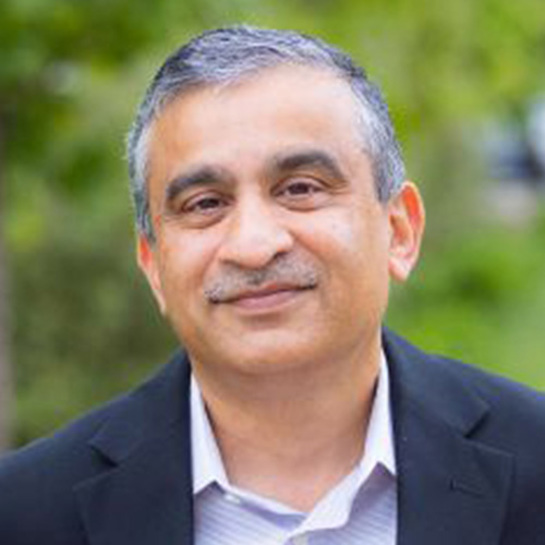
Madhav Marathe
Distinguished professor, Biocomplexity Institute at the University of Virginia
Madhav Marathe is an endowed Distinguished Professor in Biocomplexity, executive director of the Biocomplexity Institute, and a tenured professor of computer science at the University of Virginia. He is a passionate advocate and practitioner of transdisciplinary team science. His areas of expertise include digital twins, network science, artificial intelligence, multi-agent systems, high-performance computing, computational epidemiology, biological and socially coupled systems, and data analytics.
Erin Raymond
Project manager, Biocomplexity Institute at the University of Virginia
Erin Raymond is a project manager at the Biocomplexity Institute at the University of Virginia. Her work is largely focused on developing environments to enhance team science and supporting large multidisciplinary projects.


Stay Up-to-Date with Email Alerts
Sign up for our monthly newsletter and emails about other topics of your choosing.