
Innovative Professional Workshops Revolutionize Pedagogical Approaches for the Next Generation
Scientific and professional development opportunities for early-career scientists in developing countries are limited and often inconsistent. In the current scientific landscape, there are also disproportionately few generalists and a large number of specialists. The latter focus on one subtopic throughout their entire career and primarily use pedagogical practices from their own education, which may become obsolete in rapidly changing, present-day contexts.
A robust science, technology, engineering, and mathematics (STEM) education should include interdisciplinary pedagogical practices and diverse approaches in teaching and research. STEM students typically foster analytical abilities and innovation, which ultimately support problem-solving techniques and inquisitive learning. However, the COVID-19 pandemic revealed an urgent need for a drastic shift in teaching, mentoring, and research thinking. Across the STEM landscape, a more holistic training for the next generation of scientists could improve future responses to similar global challenges.
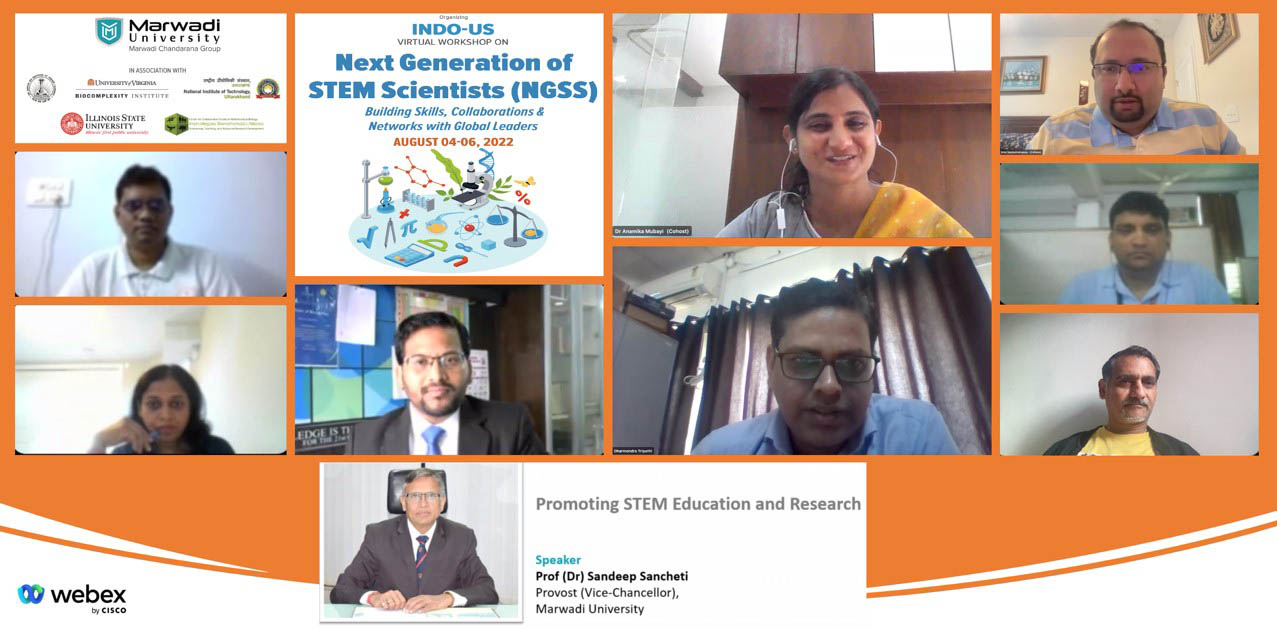
To address this current state of the field, our interdisciplinary community-academic-industry collaboration established a novel workshop series. We intend for the workshops to incorporate activities that harness state-of-the-art methodologies from leading global experts and communicate community-based takeaways that are easily adoptable within the attendees’ own environments. The first workshop in the series—titled Next Generation of STEM Scientists—took place virtually from August 4-6, 2022. Marwadi University in in Rajkot, India, hosted the event and collaborated with multiple institutions in India and the U.S. to bring it to fruition.
Workshop Goals
The August workshop sought to foster a new generation of 21st-century scientists who can promptly and effectively tackle challenging interdisciplinary problems, such as pandemics, financial recession, disease and medical-based scenarios, and global warming. The multi-day gathering commenced virtually and centered on three primary goals: (i) Identify critical skills for future scientists, (ii) recognize how researchers can successfully implement such skills, and (iii) emphasize the continuous development of interdisciplinary collaborations and networking opportunities among scientists from both academia and industry.
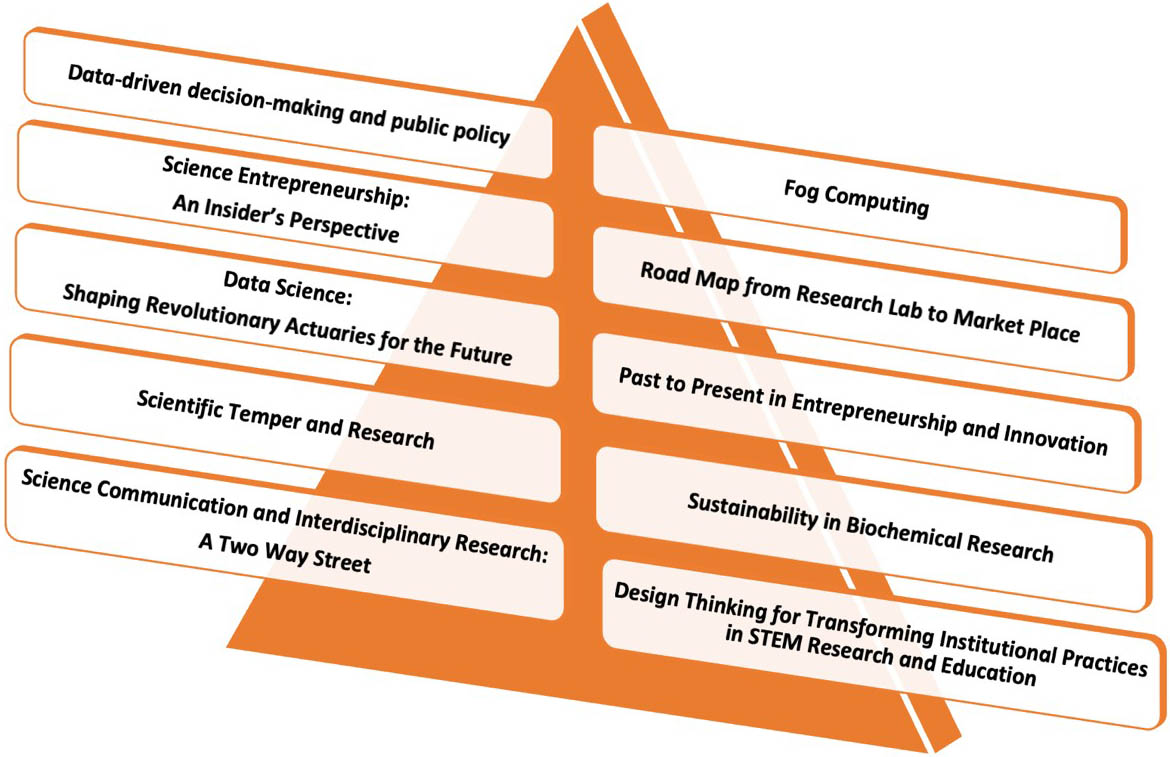
To achieve these goals, we gathered a group of interdisciplinary experts from the U.S. and India who are excited about shifting the paradigm of traditional college training. Next Generation of STEM Scientists focused on modern pedagogical and research methods that incorporate student-centered active learning techniques and provide training to help scientists effectively address upcoming challenges in a timely manner. This holistic approach includes the creation of an interdisciplinary support community that encourages continuous networking, entrepreneurships, innovation, experimental education, data-driven research, and science communication.
Speaker Lineup
The workshop organizers worked in a variety of different disciplines—including chemistry, computer science, mathematics, and biocomplexity—and hailed from various institutes that differed by region, sector (private and public), and institution size. The workshop speakers—who hailed from India, South Korea, Saudi Arabia, and the U.S.—discussed evidence-based pedagogical training methods and addressed ways to actively incorporate entrepreneurship and innovation in mainstream education. Sandeep Sancheti, provost (vice chancellor) at Marwadi University, delivered the inaugural talk, which overviewed progress in the educational system over the last decade and addressed remaining challenges. Other speakers included the following scientists from academia and industry:
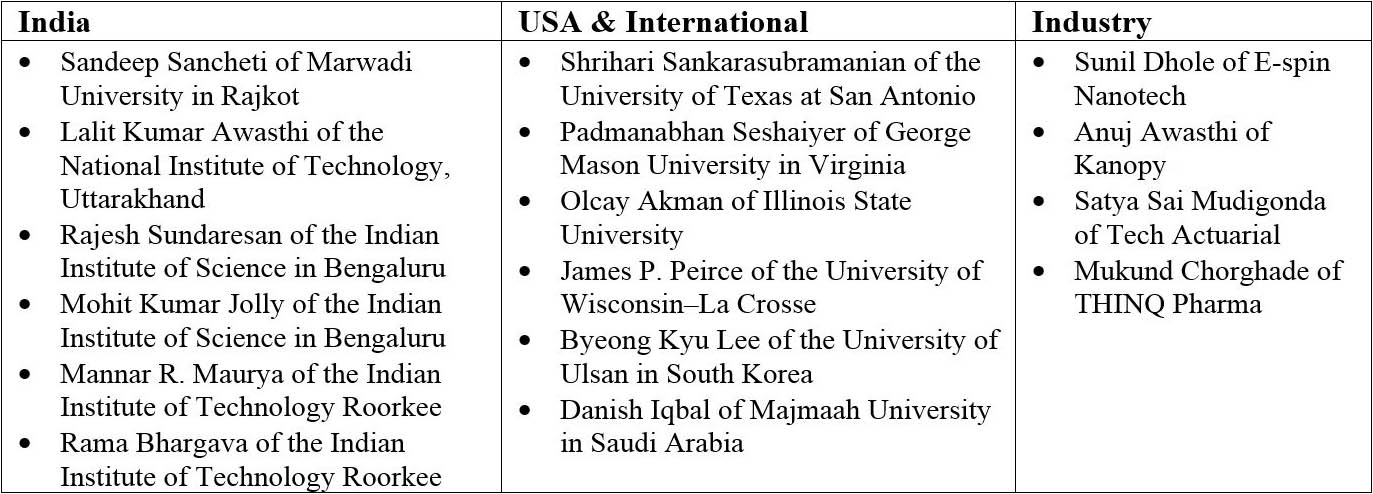
Roughly 850 individuals at various career levels—from undergraduate and graduate students to faculty and professionals in academia and industry—participated in the workshop. The event included both morning and evening sessions to accommodate participants from different time zones. Sessions fell into one of three main categories: awareness talks, hands-on working periods, and panel discussions.
Key Takeaways
The workshop covered a number of scientific dimensions, including differences in the scope of STEM fields between developing and developed countries, interdisciplinary collaborations and emerging research communities, and the creation and implementation of pedagogy and mentorship tools. As a result, the gathering amassed best practices on these topics and shared evidence-based, cutting-edge training methodologies from global leaders. Conversations also highlighted strategies through which scientists across various disciplines can collaborate to address future problems that span multiple geospatial scales.
This type of training is novel in many parts of the world. It helps participants visualize and shape themselves early in their careers, allowing them to progress holistically in their professional by relying on support networks. It also communicates awareness of diversity, inclusion, and social justice on college campuses and within broader communities.
Workshop Planning Process
The workshop planning process began almost six months before the actual event. Our multidisciplinary organizing team met on a weekly basis to brainstorm various topic ideas. Within the course of a month, the organizers decided on goals, identified the target audience, determined the dates and duration, and crafted the event’s overall structure. They spent the next month discussing the budget and options for registration fees; thankfully, participants were ultimately able to register free of charge due to funding contributions from Marwadi University, the host institution. The organizers then identified and confirmed speakers while carefully ensuring topic diversity, regional scope, interdisciplinarity, varied career levels, and holistic perspectives.
We advertised the workshop primarily on Facebook, LinkedIn, Twitter, and the event pages of participating institutions. The last steps involved preparing a thorough program for attendees and confirming details such as the venue, equipment, rooms, responsibilities, and student volunteers. Finalizing the schedule was a constantly evolving process, but the shared slide deck greatly reduced the overhead of daily logistics.
During the workshop, we worked to properly manage session timing and prepare for any technical difficulties. Afterwards, we conducted online surveys to collect feedback that can help inform our planning for the next workshop in the series. In the planning stages, we spoke with fellow scientists and researchers who had previously organized similar events and provided useful advice. However, there is not one “correct” way to organize this type of workshop, and we learned and adapted throughout the process. Our key focus remained on the creation of materials that would be open-source and accessible to all.
Conclusions
We intend to broaden the scope of the workshop series to explore continuous reinforcement learning and global collaborations. We plan to set up a website to publicize our events, host informational materials from previous iterations, and provide updates about upcoming sessions. We also quickly realized the necessity for rigorous advertising within our academic and industrial networks to solicit participation. We focused on contacting students and scientists from lesser-known regions or institutions who might otherwise not hear about the workshop, but we aim to also involve community leaders in the future.
Despite some limitations, the post-workshop survey praised the sessions’ emphases on collaborative learning for non-traditional topics in STEM that would otherwise not be easily obtainable through standard methods of teaching and mentoring. Nearly all participants stated that the pedagogical lessons they learned broadened their perspectives on science and global educational training in ways that will greatly impact their understanding of mentorship and professional practices. Looking ahead, we intend to utilize the lessons from this workshop to develop further cutting-edge research training modules in far-reaching regions to strengthen the global STEM workforce.
About the Authors
Anamika Mubayi
Director, Kalam Experts
Anamika Mubayi is director at Kalam Experts, a data analytics and consulting company supporting medical device and healthcare digital technology companies based in India. She is also a physical chemist with expertise in nanomaterials, analytical chemistry, and advanced materials characterization for emerging technology applications. Mubayi holds a Ph.D. from the University of Allahabad and an master’s from the University of Iowa. Previously, she served as Scientist-D at the International Centre for Medical Glass Engineering (IMAGE), an associate professor at Marwadi University, and project scientist at IIT Kanpur’s National Centre for Flexible Electronics. Her work bridges science, materials research, and healthcare technology innovation.
Sudipa Chauhan
Research Associate, University of Saskatchewan
Sudipa Chauhan is a research associate in the Department of Mathematics and Statistics at the University of Saskatchewan in Canada. She is a mathematical biologist with experience in the development of mechanistic spatiotemporal models with applications in infectious diseases, environmental pollution, pest management, and economic growth.
Krishna Kiran Vamsi Dasu
Associate Professor, Sri Sathya Sai Institute of Higher Learning
Krishna Kiran Vamsi Dasu is an associate professor in the Department of Mathematics and Computer Science at the Sri Sathya Sai Institute of Higher Learning in Puttaparthi, India. His research interests are in mathematical modeling with a focus on societal applications.
Ajit K. Sharma
Associate Professor, Lovely Professional University
Ajit K. Sharma is an associate professor in the Department of Chemistry within the School of Chemical Engineering and Physical Sciences at Lovely Professional University in Punjab, India. His research interests include the synthesis of functional materials, metal nanoparticles, carbon nanofibers, carbon beads, and carbon nano/microparticles (nanotechnology) for environmental and energy applications.
Srinivasan Venkatramanan
Research Assistant Professor, Biocomplexity Institute
Srinivasan Venkatramanan is a research assistant professor at the Network Systems Science and Advanced Computing division of the University of Virginia’s Biocomplexity Institute. He develops, analyzes, and optimizes computational models for complex systems that arise in the domains of epidemiology and food security.
Vicky Jain
Chemistry Department Head, Marwadi University
Vicky Jain is the Vice Principal of the Faculty of Science and head of the Department of Chemistry at Marwadi University in India. His research interests include synthetic organic chemistry and medicinal chemistry.
Anuj Mubayi
Principal, NumericaIQ
Anuj Mubayi is the Principal of NumericaIQ, a Fellow in Residence at the Intercollegiate Biomathematics Alliance in the USA, an honorary fellow at the Kalam Institute of Health Technology in India, and a Scientific Advisor for Kalam Experts. Previously, Mubayi served as director of the Mathematical and Theoretical Biology Institute, was a faculty member at Arizona State University, and worked in the healthcare industry. His expertise spans health decision science, with a focus on health economics, data-driven disease modeling, and real-world evidence generation.
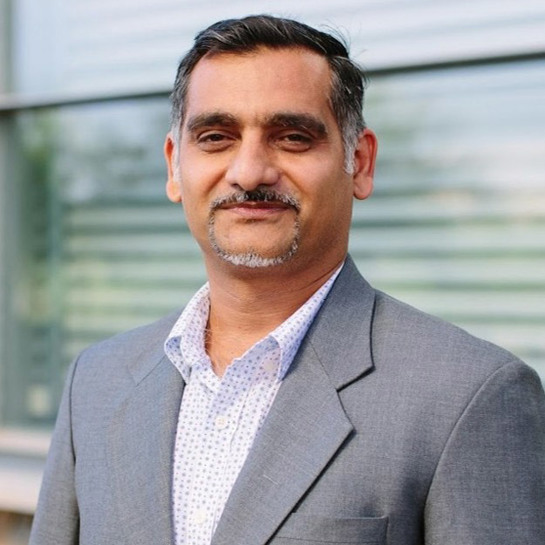
Dharmendra Tripathi
Associate Professor, National Institute of Technology, Uttarakhand
Dharmendra Tripathi is an associate professor in the Department of Mathematics at the National Institute of Technology, Uttarakhand in India. His research interests are in the mathematical modelling and analysis of problems that relate to physiological flows.
Stay Up-to-Date with Email Alerts
Sign up for our monthly newsletter and emails about other topics of your choosing.