
Obituary: Fred Brauer
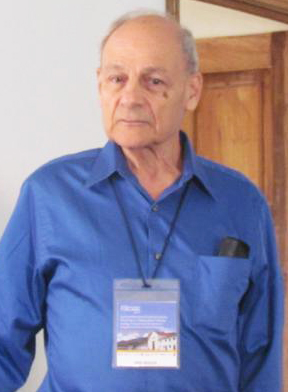
Fred Brauer, professor emeritus of mathematics at the University of Wisconsin–Madison, passed away on October 17, 2021, in Vancouver, British Columbia. He was 89 years old. Fred earned his Ph.D. in 1956 from the Massachusetts Institute of Technology and was a member of UW–Madison’s Department of Mathematics from 1960 to 1997. His Ph.D. students during this time included many distinguished mathematicians. He was an enthusiastic mentor who enjoyed working with students.
After retiring from UW in 1997, Fred moved to Vancouver with his wife, Esther, and became an honorary fellow at the University of British Columbia (UBC). He continued to supervise graduate students at UBC long after his retirement and never stopped teaching, mentoring, and conducting research; he even published several recent papers that modeled the spread of COVID-19.
Fred was an incredibly prolific researcher. He published more than 170 articles and 10 books during his life, at least two of which are routinely recognized as key references. Fred’s work was cited over 1,600 times in 2020 alone. His research in differential equations spans the spectrum from highly theoretical papers to studies of disease outbreaks like severe acute respiratory syndrome and COVID-19. His theoretical research papers and books with John Nohel about the mathematical properties of differential equations have become classics and remain in print to this day — 50 years after initial publication.
In the 1970s, Fred became interested in differential equations in the context of population dynamics: part of the growing field of mathematical biology. His research shifted towards mathematical epidemiology in the late 1980s, and he traced many different aspects of infectious disease spread. He was inducted into the 2015 class of SIAM Fellows for his contributions to differential equations, predator-prey systems and harvesting, mathematical epidemiology of infectious diseases, and applied mathematics education.
Fred’s mentorship of young mathematicians and scientists around the world inspired an immense legacy in mathematical biology. Hundreds of students benefited from his wisdom and experience at the Mathematical and Theoretical Biology Institute (MTBI), a Research Experiences for Undergraduates site at Arizona State University. Fred served as a mentor to more than 500 students from diverse backgrounds at MTBI over 23 consecutive years, and later became a Ph.D. committee member for several of the program’s alumni. His experiences at MTBI comprised the foundation for his later textbooks on differential equations and mathematical biology. Fred was also a frequent visitor to the International Research Experience for Students: Population Dynamics and Complex Systems program in Bogotá, Colombia, where he taught and mentored many students from around the globe.
Fred’s co-authored graduate textbook with Castillo-Chavez, Mathematical Models in Population Biology and Epidemiology, has been cited over 3,300 times in scientific literature and is now in its second edition. Mathematical Epidemiology, a book of lecture notes in mathematics that he co-authored with Pauline van den Driessche and Jianhong Wu, has been cited more than 1,100 times. He also co-wrote Mathematical Models in Epidemiology (with Castillo-Chavez and Zhilan Feng) and Dynamical Systems for Biological Modeling: An Introduction (with Christopher Kribs). Fred authored his recent papers with students at all different levels—including undergraduates—which yielded an incredibly diverse set of collaborations. His work continues to have a profound impact; he helped cultivate a new generation of scientists in the field of mathematical biology and influenced experienced professionals who were lucky enough to interact with him both personally and professionally.
Fred leaves behind a broad legacy of students and researchers who profited from his generosity with both his time and encouragement. His intellectual curiosity, engaging manner, and humility impressed us all. Fred’s dedication to his family and his life's work made him a most exceptional man; his life was indeed a blessing to everyone who knew him. He is survived by his wife Esther; children David, Deborah, and Michael; several grandchildren; and extended family — both mathematical and biological.
About the Authors
Anuj Mubayi
Principal, NumericaIQ
Anuj Mubayi is the Principal of NumericaIQ, a Fellow in Residence at the Intercollegiate Biomathematics Alliance in the USA, an honorary fellow at the Kalam Institute of Health Technology in India, and a Scientific Advisor for Kalam Experts. Previously, Mubayi served as director of the Mathematical and Theoretical Biology Institute, was a faculty member at Arizona State University, and worked in the healthcare industry. His expertise spans health decision science, with a focus on health economics, data-driven disease modeling, and real-world evidence generation.

Mac Hyman
Emeritus Evelyn and John Phillips Distinguished Chair in Mathematics, Tulane University
Mac Hyman is the emeritus Evelyn and John Phillips Distinguished Chair in Mathematics at Tulane University and a Past President of SIAM. He has developed and analyzed mathematical models for the spread of malaria, dengue fever, chikungunya, and other vector-borne diseases to help public health workers effectively mitigate their impact.
Christopher Kribs
Distinguished Teaching Professor, University of Texas, Arlington
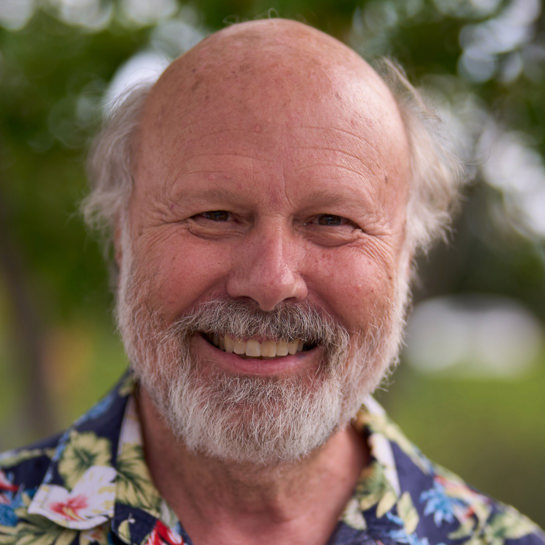
Christopher Kribs is a Distinguished Teaching Professor and Distinguished Research Professor in the Department of Mathematics and the Department of Curriculum and Instruction at the University of Texas at Arlington. He received a Fulbright Scholarship in 2003 and a Marie Curie Fellowship in 2009. His research interests lie in two areas: mathematical population biology and mathematics education.
Carlos Castillo-Chavez
Retired Professor, Arizona State University
Carlos Castillo-Chavez recently retired from Arizona State University (ASU), where he was Regents Professor and Joaquín Bustoz Jr. Professor of Mathematical Biology. He was also the founder and former executive director of the Mathematical and Theoretical Biology Institute and the Simon A. Levin Mathematical, Computational and Modeling Sciences Center ASU. His research is driven by the role of social dynamics (social landscape) in disease evolution, and he is a strong supporter of mentoring and encouraging underrepresented minority students in the U.S. for higher education and research.
Stay Up-to-Date with Email Alerts
Sign up for our monthly newsletter and emails about other topics of your choosing.