
Obituary: Richard A. Tapia
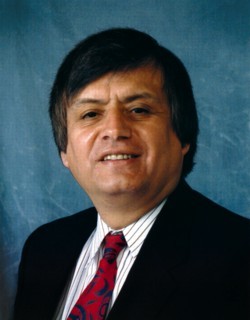
Richard Alfred Tapia, a distinguished mathematician in the fields of mathematical optimization and iterative methods for nonlinear problems, passed away on May 22, 2026, at the age of 88. His work and influence on both SIAM and the applied mathematics community will continue to inspire generations of mathematicians to come.
Richard was born on March 25, 1938, in Santa Monica, California. His parents, Amado and Maria Magdalena Tapia, had five children after immigrating to the U.S. from Mexico. Richard had a twin brother Bobby. In their youth, the Tapia brothers successfully built and raced cars; they made drag-racing history with a 6.54-second quarter-mile — a world record at the time and an achievement recognized by the National Hot Rod Association. Richard attended Los Angeles Harbor College, a public community college in Wilmington, California, where he earned his associate’s degree before transferring to University of California, Los Angeles (UCLA) for his undergraduate degree. Despite showing enormous promise as an undergraduate, Richard was not initially offered financial support as a graduate student at UCLA, something that is puzzling in hindsight. He instead worked as a mathematician at the Todd Shipyards in San Pedro, California, and later as a part-time scientific programmer at IBM Los Angeles. Later, he garnered graduate student support from the Office of Naval Research that ultimately enabled him to earn his Ph.D. from UCLA in 1967. Throughout his life Richard was always a proud Angeleno.
Richard defied classification: he was as knowledgeable and enthusiastic about chrome, paint, and horsepower as he was about mathematical optimization and its applications. Throughout his career, Richard demonstrated that the successful examination of deeply technical obstacles—whether a nonlinear system of equations or a high-gloss paint on a Chevelle—depends on deep thinking about modeling, careful iteration of ideas, and knowing when to step back and admire the result. Richard’s technical work quickly earned him the reputation of an applied mathematician of distinction; he produced fundamental contributions to optimization theory and computational mathematics. In his Ph.D. thesis, under the direction of Charles Tompkins, Richard generalized Newton’s method by extending it to solve a wider class of nonlinear and variational problems, including the Euler-Lagrange equations. His work provided a rigorous framework for the analysis of the convergence of Newton’s Method when solving complex optimization problems. Richard often reflected on his time at UCLA as a formative period of growth, shaped by wise guidance from a supportive and distinguished faculty. Among them, David A. Sánchez, a member of his thesis committee, offered insightful criticism and encouragement, serving as an important sounding board throughout the development of this work. Richard’s research was also closely connected to the broader research program of Magnus Hestenes, whom Richard frequently credited in later lectures during his tenure at Rice University as having exerted a lasting and profound influence on his career and research in optimization.
Richard continued his advances in mathematical theory for solving complex nonlinear problems efficiently and reliably. His research contributed to a broader understanding of how iterative algorithms converge and their adaptation to a wide variety of sophisticated mathematical models. For example, when one looks at nearly all contemporary machine learning (ML) and deep learning systems, they are all trained by solving optimization problems. The objective is to minimize a loss function over millions or even billions of parameters. Many of today’s large-scale models rely on variants of gradient descent, for which the underlying theory of optimization—including convergence analysis, curvature information, constrained optimization, and Newton-type methods—draws heavily from the mathematical foundations developed by researchers like Richard. Many advanced optimization techniques used in ML can be understood as descendants or adaptations of ideas that emerged from the broader Newton and nonlinear programming traditions to which Richard made important contributions. He made profound additions to the analysis of secant methods, which helped to establish a deeper theoretical understanding of these powerful gradient-based techniques for solving nonlinear equations and optimization problems. His work in nonlinear programming advanced the mathematical foundations of constrained optimization and provided new insights into the behavior and convergence of iterative algorithms. Among his many achievements was the study of so-called indicator functions, where he developed elegant formulations for understanding constraints and optimality. Motivated by Georg Cantor’s diagonalization proof, Richard created the Diagonalized Multiplier Method, an innovative approach for solving complex constrained optimization problems. Yet another influential contribution was his work on the equivalence of optimality systems, an analysis that described fundamental relationships among alternative formulations of necessary and sufficient conditions for optimality and strengthened the conceptual framework underlying mathematical programming. Through his skillful mathematical rigor, practical insight, and unique creativity, Richard shaped optimization as a discipline, leaving a legacy that continues to influence research today.
Richard moved from Los Angeles to the University of Wisconsin–Madison, where, in 1968, he was a freshly minted Ph.D. working at the Mathematics Research Center. He described his decision to move to the University of Wisconsin as one of the best decisions of his life. He frequently reported to his colleagues and students that being surrounded by his mathematical heroes—people like Michael Golomb and Isaac Jacob Schoenberg—and the effort that they made to include him, seek his opinion, and to befriend him had an enormous effect. He described their exchange of research and opinions, and only in hindsight did Richard realize he was being mentored. He attributes his time in Madison as being where he learned that professional kindness need not be in conflict with greatness, a lesson he imparted to his students and those who worked with him. From Madison, he went to Rice University where he would spend the majority of his career, save a one-year sabbatical at Stanford University between 1976 and 1977. At Rice, Richard held various positions; he started as an assistant professor of mathematical sciences—now the department of computational applied mathematics and operations research—in 1970, eventually being promoted to full professor in 1976, and served as a department chair from 1978 to 1983. At the time of his death, he still served as a university professor and the Maxfield-Oshman Professor of Engineering. He also served as the director of Rice University’s Alliances for Graduate Education and the Professoriate Program and director of the Tapia Center, whose mission is to “empower everyone to be able to pursue education and careers in STEM.”
Richard also worked with SIAM many times throughout his career. For his contributions to linear and nonlinear programming and efforts to increase diversity, Richard was inducted into the inaugural class of SIAM Fellows in 2009. He was also awarded the SIAM Prize for Distinguished Service to the Profession in 2004, an award that recognized his work advancing mathematics and strengthening the scientific community. He was a member of the SIAM Board of Trustees as well as an editor of the SIAM Journal on Numerical Analysis and SIAM Journal on Optimization. He was an officer for SIAM’s Activity Group in Optimization, served on SIAM’s Diversity Advisory Committee for 11 years, and a frequent organizer of SIAM events, including co-chairing the organizing committees for SIAM meetings in Houston and Rio Grande, Puerto Rico. Richard was often invited to give plenary seminars around the world; he delivered a Centennial Lecture, titled “The Emergence of Numerical Optimization,” at the 1988 SIAM Annual Meeting in Minneapolis, and delivered “Some Mathematical Insights Into Car and Bicycle Racing” for the I.E. Block Community Lecture at the 1999 SIAM Annual Meeting in Atlanta.
In addition to Richard’s contributions to SIAM, he became the first U.S.-born Hispanic individual to be elected to the National Academy of Engineering, and later received the Presidential Award for Science, Mathematics, and Engineering Mentoring from President Bill Clinton. Richard served on the National Science Board from 1996 to 2002 and was later awarded the National Medal of Science in 2011 by President Barack Obama. More of Richard’s accolades include the National Science Foundation’s Vannevar Bush Award and the American Association for the Advancement of Science’s Public Engagement with Science Award; he was the charter recipient of the Computing Research Association’s A. Nico Habermann Award in 1994, and he was named a Fellow of the American Mathematical Society in 2021. There is no doubt that Richard played a unique role highlighting underrepresented groups of mathematicians, which helped foster a more inclusive and vibrant mathematical community. The Association for Computing Machinery established the annual Richard Tapia Celebration of Diversity in Computing Conference where the Richard A. Tapia Achievement Award for Scientific Scholarship, Civic Science and Diversifying Computing is awarded. There is also the biennial Blackwell–Tapia Conference, where the Blackwell–Tapia prize is awarded in honor of the legacies of both Richard and David Blackwell, whose positive influences on the African American and Hispanic communities in the mathematical sciences are undeniable.
Richard’s commitment to excellence, opportunity, and inclusion is further recognized through the MAA-SIAM-AMS Hrabowski-Gates-Tapia-McBay Lecture, which honors individuals who have advanced these ideals within the profession. Through these initiatives and by personal example, Richard earned extraordinary respect, admiration, and affection from generations of mathematicians, particularly those from underrepresented backgrounds. This is a true testament to the breadth, depth, and enduring significance of his influence. Earlier this year, Harris County in Texas honored him by renaming the Beltway 8 Ship Channel Bridge as the Dr. Richard A. Tapia Bridge, a recognition that meant a great deal to Richard [1].
Interestingly, what made Richard most proud was the cadre of students, postdocs, and younger colleagues he brought together. He was a wizard at assembling personalities and stitching together different technical skills to maximize output. The research inclusion he appreciated so much at University of Wisconsin–Madison as a postdoc was very much practiced and imparted to his collaborators, especially students and postdocs. Through the decades he spent as a tireless sounding board for ideas and in a campus office with a door that was always open, Richard’s international network of friends is immense. When word spread of his serious illness, the response was almost instantaneous. The network lit up with phone calls, messages, schedules being rearranged, and flights to Houston being booked, from friends near and far. This was a powerful demonstration of friendship and profound debt felt by those who were lucky enough to cross paths with Richard. In addition to the clarity, confidence, and professional enlightenment he bestowed on so many, he left us with the best memories, fantastic stories, and important lessons to pass on to the next generation.
Acknowledgements: Rodrigo Bañuelos and Anthony J. Kearsley wish to express their sincere gratitude to Luis Melara, professor of mathematics at Shippensburg University and SIAM Vice President for Equity, Diversity, and Inclusion, for suggesting that they write this obituary and for encouraging them throughout its preparation.
References
[1] Smith, B. (2026, March 20). Harris County names Ship Channel Bridge for Rice mathematician Richard Tapia. Rice University Office of Public Affairs. Retrieved from https://news.rice.edu/news/2026/harris-county-names-ship-channel-bridge-rice-mathematician-richard-tapia.
About the Authors
Rodrigo Bañuelos
Professor Emeritus, Purdue University
Rodrigo Bañuelos is an emeritus professor in the Department of Mathematics at Purdue University. His research focuses on applications of probability to harmonic analysis, partial differential equations, and spectral theory. He received the 2004 Blackwell–Tapia Prize in Mathematics and the 2022 American Mathematical Society (AMS) Award for Distinguished Public Service, and is a Fellow of SIAM, AMS, Institute of Mathematical Statistics, and Association for Women in Mathematics.
Anthony J. Kearsley
Staff research mathematician, National Institute of Standards and Technology
Anthony J. Kearsley is a staff research mathematician in the Applied and Computational Mathematics Division at the National Institute of Standards and Technology.
Stay Up-to-Date with Email Alerts
Sign up for our monthly newsletter and emails about other topics of your choosing.