Obituary: Robert Vita Kohn
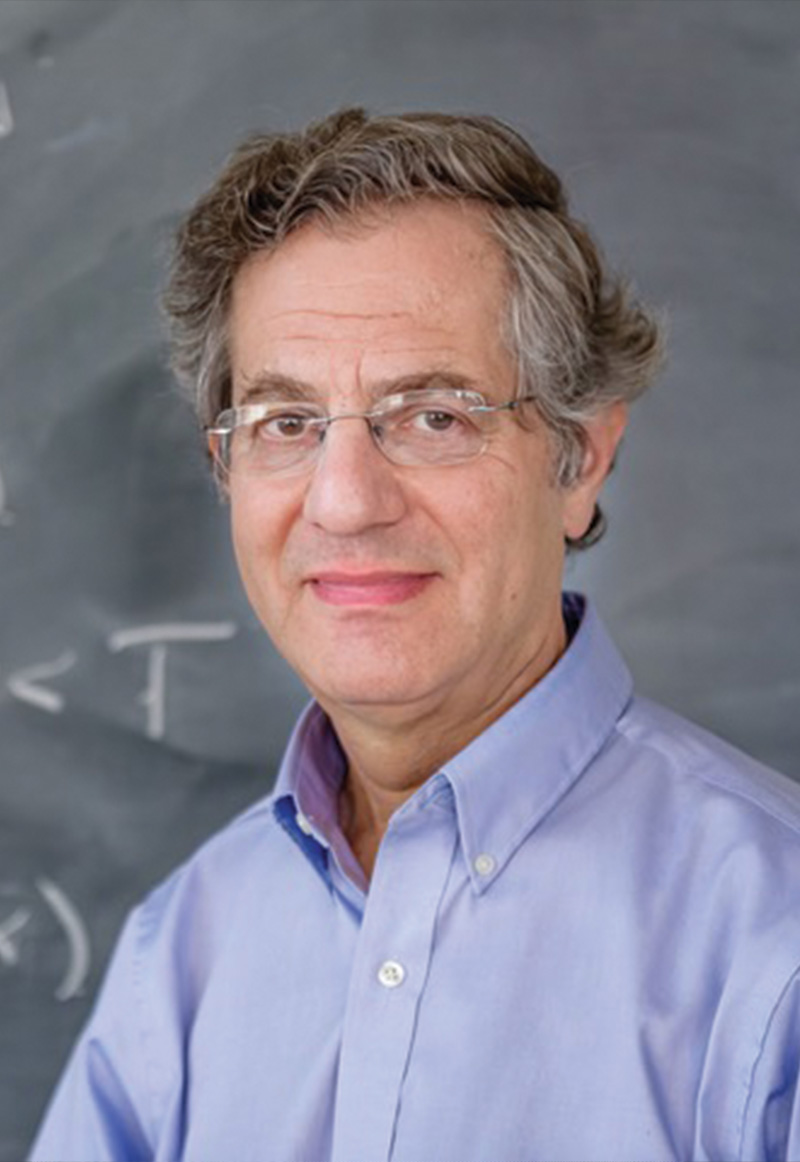
Robert Vita Kohn, a leading researcher in the applied mathematics community, passed away on January 12, 2026, at the age of 73. Bob Kohn was an outstanding mathematician whose work, dedication, and support directly impacted countless members of our community. His profound legacy lies in the depth and originality of his scientific vision, his gift for bringing together ideas and people across disciplines, his extraordinary support for students and colleagues, and his untiring service to New York University’s (NYU) Courant Institute of Mathematical Sciences and to SIAM.
Bob was born on October 5, 1953, in Shaker Heights, Ohio. His love for mathematics developed early on as a camper, and then a counselor, at an Ohio State University-sponsored math camp. After earning his undergraduate degree in mathematics at Harvard University in 1974, he completed his Ph.D. at Princeton University in 1979, working under the guidance of geometric measure theorist Fred Almgren. He spent his academic career at the Courant Institute of Mathematical Sciences, first as a two-year National Science Foundation postdoctoral fellow, then as a part of the faculty; he ultimately became an NYU Silver Professor of Mathematics. Bob retired in 2022.
Research Contributions
Bob’s research began with his thesis on the rigidity of elastic deformations, inspired by the work of Fritz John [4]. Soon thereafter, Bob, together with Luis Caffarelli and Louis Nirenberg, established the landmark partial regularity result for weak solutions of the Navier-Stokes equations [1]. This breakthrough—now known as the Caffarelli-Kohn-Nirenberg theorem—has remained foundational in the field and was honored with the 2014 AMS Leroy P. Steele Prize for Seminal Contribution to Research. During this period, Bob also made significant contributions to the field of semilinear partial differential equations in work with Yoshikazu Giga. In collaborations with Roger Temam, Gilbert Strang, and Michael Vogelius, he made connections between geometric measure theory, the calculus of variations, and applied problems in plasticity, thin plates, inverse problems, and optimal design.
Bob later emerged as a pioneering figure in what is now known as the mathematical aspects of materials science. He identified mathematical issues in various open problems of physics and materials — work that not only led to new insights concerning these applications, but also advances in mathematical methods. Themes of homogenization, relaxation, and Gamma convergence are echoed throughout his work on composite materials, phase transforming materials, and plasticity.
Bob introduced the phrase “energy-driven pattern formation,” which also served as the title of his plenary lecture at the 2006 International Congress of Mathematicians [3]. As he noted in the introduction to his lectures at a summer school on the topic, “Nature is full of energy-driven patterns. Some represent local or global minimizers of a suitable free energy, others are self-organized transients produced by energy dissipating dynamics.” Bob explored phenomena like martensitic phase transformations, magnetic domains, and wrinkling of thin films that lead to nonconvex (often nonlocal) variational problems regularized by singular perturbations at higher order — a topic he elaborated on in SIAM News in 2018 [5]. He established scaling laws for the resulting patterns of the solution in the singular limit, leading to new relaxation results. Closely related, Bob demonstrated that motion by mean curvature is the singular limit of the Ginzburg-Landau equation and provided bounds on the coarsening rates on the microstructure.
He also investigated cloaking—the problem of designing a medium that could hide an object by diverting electromagnetic waves (light) around it to emerge unperturbed—and, more recently, the analysis of deformation in mechanical metamaterials and kirigami.
Bob’s intellectual curiosity extended to many areas, including economics and finance. His notable research on two-person games—originally linked to motion by mean curvature—evolved into influential work on prediction with expert advice. He possessed a rare gift for distilling the essence of any scientific presentation and articulating it with exceptional clarity, often illuminating the core insight even for the speaker.
Bob was a fellow of the American Academy of Arts and Science, American Mathematical Society, and SIAM. In 1999, he received the SIAM Ralph E. Kleinman Prize for work bridging deep mathematics and real-world applications. Along with his coauthors, Bob was a recipient of the Keith Medal from the Royal Society of Edinburgh in 2006 for their paper on the gradient theory of phase transitions [2].
Leadership and Mentorship
Bob worked tirelessly for the Courant Institute, serving as deputy director for many years and as chair of mathematics. Throughout his career, he supervised 36 Ph.D. theses and a vast number of postdocs; moreover, his support extended to the community at Courant and beyond, writing innumerable highly insightful letters of recommendation and serving on many committees. He played a central role in conceiving and leading the master’s in mathematical finance program and the curriculum development for both the master’s and undergraduate program. He was beloved by students at NYU for the quality of his lectures and for the caring personal attention he gave them. He was one of the few mathematicians to receive the NYU Distinguished Teaching Award.
For more than 40 years, SIAM was Bob’s professional home, to which he gave an astonishing amount of himself. Bob combined scholarly distinction with extraordinary service, acting as the founding chair of the SIAM Activity Group on Mathematical Aspects of Materials Science and co-chair for its 2010 meeting. He served six years on the SIAM Board of Trustees and, for the past 15 years, was a central, steady presence on the Financial Management Committee. Across the board, colleagues described him in the same way: thoughtful, wise, clear-thinking, and kind. In moments of complexity and chaos, he had a gift for cutting to the heart of an issue calmly and humanely. His attention to detail was legendary, never making rash decisions — only careful ones, followed by deep commitment. Last year, he made a major gift to help secure the future of the SIAM John von Neumann Prize, remarking simply, “It is a pleasure to be able to help SIAM this way.” That quiet sentence captures him exactly: no fanfare, just purpose and gratitude. Across governance, prizes, mentorship, and philanthropy, Bob’s intellect was matched by his judgment and character that one colleague summed up best in three words: “such a mensch.”
For so many of us, Bob will be remembered above all as an extraordinarily generous, perceptive, and tireless mentor. His guidance and encouragement reached countless young mathematicians and colleagues throughout many fields. He was a towering figure in applied mathematics, someone who never turned away from a direct—or even unspoken—request for advice, insight, or support. Even so, his generosity was not confined to science; he offered wisdom, warmth, and help just as freely in everyday life. Bob helped several scientists emigrate to the U.S. after the fall of the Soviet Union. He continued to mentor, serve, and work even during his long illness, which he faced with calmness and courage. His influence on successive generations of mathematicians and scientists has been remarkable. Bob was one of a kind and he will be deeply missed. Our deep thoughts go out to Leslie Anker, Bob’s beloved wife and life partner.
References
[1] Caffarelli, L., Kohn, R., & Nirenberg, L. (1982). Partial regularity of suitable weak solutions of the Navier-Stokes equations. Comm. Pure Appl. Math., 35(6), 771-831.
[2] DeSimone, A., Müller, S., Kohn, R.V, & Otto, F. (2001). A compactness result in the gradient theory of phase transitions. Proc. R. Soc. Edinb. A: Math., 131(4), 833-844.
[3] Kohn, R.V. (2007). Energy-driven pattern formation. In Proceedings of the international congress of mathematicians Madrid, volume I. Plenary lectures and ceremonies (pp. 359-383). Madrid, Spain: EMS Press.
[4] Kohn, R.V. (1979). New estimates for deformations in terms of their strains: I) Estimates of Wirtinger type for nonlinear strains; II) Functions whose linearized strains are measures [Ph.D. thesis, Department of Mathematics, Princeton University]. ProQuest.
[5] Kohn, R.V. (2018). The Mathematics of Wrinkles and Folds. SIAM News, 51(2), 9-12.
About the Authors
Kaushik Bhattacharya
Professor, California Institute of Technology
Kaushik Bhattacharya is Howell N. Tyson Sr. Professor of Mechanics and professor of materials science at the California Institute of Technology.
Rustum Choksi
Professor, McGill University
Rustum Choksi is a professor and department chair of mathematics and statistics at McGill University.
Sylvia Serfaty
Silver Professor of Mathematics, New York University
Sylvia Serfaty is a Silver Professor of Mathematics at the Courant Institute of New York University and professor at Sorbonne Université.
Stay Up-to-Date with Email Alerts
Sign up for our monthly newsletter and emails about other topics of your choosing.