
2026 July Prize Spotlight
Congratulations to the following 17 SIAM prize recipients who will be recognized at 2026 SIAM Annual Meeting (AN26), taking place July 6-10 in Cleveland, Ohio, U.S., along with the following co-located conferences: the SIAM Conference on Applied Mathematics Education (ED26), happening July 9-10, 2026; the SIAM Conference on the Life Sciences (LS26), happening July 6-9, 2026; and the SIAM Conference on the Mathematics of Planet Earth (MPE26), happening July 6-8, 2026. All awardees will be recognized at the Honors and Awards Luncheon on Tuesday, July 7 at 12:15 p.m. ET.
- Fioralba Cakoni – AWM-SIAM Kovalevsky Lecture
- Duncan Dauvergne, Janosch Ortmann, and Bálint Virág – George Pólya Prize in Mathematics
- Magnus Fontes – I. E. Block Community Lecture
- Mark Newman – John von Neumann Prize
- Adrian I. Nachman – Julian Cole Lectureship
- Fatih Dinc – Richard C. DiPrima Prize
- Nandi Leslie – SIAM Industry Prize
- Russel E. Caflisch – SIAM Prize for Distinguished Service to the Profession
- Anthony Michael Bloch – W. T. & Idalia Reid Prize
- Máté L. Telek – SIAM Student Paper Prize
- Aimee Maurais – SIAM Student Paper Prize
- Konstantin Riedl – SIAM Student Paper Prize
- Ondrej Maxian – SIAM Activity Group on Life Sciences Early Career Prize
- Ashesh Chattopadhyay – SIAM Activity Group on Mathematics of Planet Earth Early Career Prize
- Freddy Bouchet – SIAM Activity Group on Mathematics of Planet Earth Prize
Fioralba Cakoni
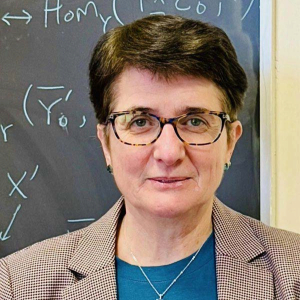
Dr. Fioralba Cakoni, Rutgers University, New Brunswick, will deliver the 2026 AWM-SIAM Sonia Kovalevsky Lecture. She is a Distinguished Professor of Mathematics at Rutgers University and one of the founders and leading proponents of the qualitative approach to inverse scattering theory, which has been described as a paradigm shift in the field of inverse problems. Her research has advanced the mathematical foundations of inverse scattering and led to powerful methods for the identification and characterization of unknown objects from measured wave data. Through her work on transmission eigenvalues and non-iterative reconstruction methods, she has made fundamental contributions to inverse problems with applications ranging from nondestructive testing to synthetic aperture radar.
Fundamental to her investigations is the appearance of a new class of non-self-adjoint eigenvalue problems called transmission eigenvalues. This research is the subject matter of her book with David Colton and Houssem Haddar entitled Inverse Scattering Theory and Transmission Eigenvalues, the second edition of which has recently appeared in SIAM’s CBMS-NSF Regional Series in Applied Mathematics.
This year’s Kovalevsky Lecture, titled “Spectral Problems in Inverse Scattering,” will take place on Tuesday, July 7 at 2:00 p.m.
The Association for Women in Mathematics (AWM) and SIAM award this prize every year to highlight significant contributions of women to applied or computational mathematics. The lecture is normally given at the SIAM Annual Meeting.
Dr. Cakoni is a Distinguished Professor of Mathematics at Rutgers University, New Brunswick, where she has been a faculty member since 2015. She received her Ph.D. in mathematics from the University of Tirana under the supervision of Professor George Dassios at the University of Patras. Following her doctoral studies, she was awarded an Alexander von Humboldt Postdoctoral Fellowship at the University of Stuttgart, Germany, where she spent two years. She subsequently joined the Department of Mathematical Sciences at the University of Delaware as a faculty member and has also held visiting research positions at École Polytechnique and ENSTA Paris in France.
Dr. Cakoni has received numerous recognitions for her contributions to mathematics, including being named a 2023 SIAM Fellow. She is also a 2016 Simons Fellow in Mathematics and a 2019 Fellow of the American Mathematical Society. As a foreign member of the Albanian Academy of Sciences, she was recently awarded the Presidential Medal “Lisi Akademik.” She is the Editor-in-Chief of Inverse Problems and serves on multiple editorial boards of professional journals, including SIAM Journal of Applied Mathematics and SIAM Journal of Mathematical Analysis.
Dr. Cakoni’s research focuses on direct and inverse scattering theory, non-iterative reconstruction methods, spectral methods in inverse scattering, and inverse problems for partial differential equations. She has co-authored more than 120 research articles and three monographs. Learn more about Dr. Cakoni.
Q: Why are you excited to receive the award?
A: It is a great honor to have been selected by SIAM and AWM for the prestigious Kovalevsky Lecture Prize. I am particularly pleased that this award is associated with the name of Sonia Kovalevsky, the first woman ever appointed to a full professorship in mathematics. Her celebrated contributions to analysis, differential equations, and mechanics have made her an enduring symbol of excellence and perseverance in mathematics and an inspiring example for generations of women in science.
I am also excited that this named lecture brings into the spotlight the area of inverse problems, which extends across many disciplines and has far-reaching applications in the life sciences and engineering. This award is also a tribute to my mentors, collaborators, and students, as well as to the continued advances in mathematics that have shaped my work in inverse problems. I feel deeply privileged to be recognized for work that reflects where my passion lies.
Q: What does your work mean to the public?
A: A substantial part of my work concerns the solution of inverse scattering problems, including mathematical analysis and the design of efficient reconstruction algorithms. Together with many colleagues and collaborators around the world, I have contributed to the founding and advancement of the qualitative approach to inverse scattering theory, which has been described as a paradigm shift in the field of inverse problems. My work on inverse scattering problems has been utilized in the development of new methods in nondestructive testing, improved techniques for synthetic aperture radar and other imaging modalities, and applications in materials science. Fundamental to my investigations with many collaborators is the emergence of a new class of non-self-adjoint eigenvalue problems called transmission eigenvalues.
Q: Could you tell us about the research that won you the award?
A: The inverse scattering problem is inherently nonlinear and ill-posed, posing fundamental challenges for uniqueness, stability, and algorithmic reconstruction. For many years, most algorithms for target identification relied either on weak scattering approximations or on nonlinear optimization techniques. While linearized models remain useful in some applications, the increasing demands of modern imaging have made clear that the simplifying assumptions underlying weak scattering approximations limit when reliable reconstructions are possible. At the same time, nonlinear optimization methods often require detailed a priori information and highly accurate physical models that are unavailable in many practical settings, such as the imaging of complex engineered structures. These challenges motivated the development of new imaging methodologies that avoid restrictive modeling assumptions and, rather than attempting full parameter reconstruction, aim to extract key qualitative features of the scattering object, such as its shape or estimates of its material properties. These approaches, collectively known as qualitative or non-iterative methods in inverse scattering theory, represent a paradigm shift in the field.
My work, together with collaborators and graduate students, has contributed to establishing the mathematical and computational foundations and advancing the development of this approach. Prominent examples of qualitative methods include linear sampling, generalized linear sampling, and factorization methods. These techniques lead to mathematically justified and computationally efficient reconstruction algorithms by exploiting properties of the linear scattering operator, determined solely from measured scattering data, to decode nonlinear information about the unknown object. The analysis of these methods reveals deep connections between the scattering operator and interior eigenvalue problems defined on the support of the scatterer. A central example is the transmission eigenvalue problem, a non-self-adjoint eigenvalue problem with a remarkably rich and subtle mathematical structure. Transmission eigenvalues are intrinsic to the scattering phenomenon and play a role comparable to scattering poles in understanding the analytic structure of the scattering operator. Consequently, they have attracted considerable attention from both mathematicians and practitioners. From an applied perspective, these eigenvalues can be extracted from scattering data and provide valuable information about the material properties of the scattering medium. From a mathematical viewpoint, they raise challenging questions in the spectral theory of non-self-adjoint operators and free boundary regularity and connect to classical problems such as Schiffer’s conjecture and the Pompeiu problem.
What excites me most about these developments is the interplay between impactful applications of inverse scattering and emerging of new and beautiful mathematics whose ideas extend far beyond their original motivation.
Q: What does being a member of SIAM mean to you?
A: I have been a member of SIAM for over 10 years and have been actively involved in many aspects of what SIAM offers to the community, including numerous SIAM journal editorial boards. SIAM plays a key role in my professional activities by promoting and disseminating my research through its many platforms, including outstanding professional publications and international scientific activities such as conferences and activity groups. As an interdisciplinary association, its mission of connecting mathematics with many other fields strongly resonates with the goals of my research. In particular, SIAM has been instrumental in facilitating the development of a broad international network of researchers across disciplines and across academic and research institutions around the world.
Interested in submitting a nomination for the AWM-SIAM Sonia Kovalevsky Lecture? The prize next opens for nominations on August 1, 2026.
Duncan Dauvergne, Janosch Ortmann, and Bálint Virág
Drs. Duncan Dauvergne, Janosch Ortmann, and Bálint Virág are the recipients of the 2026 George Pólya Prize in Mathematics. The team received the award for the discovery of the directed landscape, the fundamental geometric object underlying the KPZ universality class.
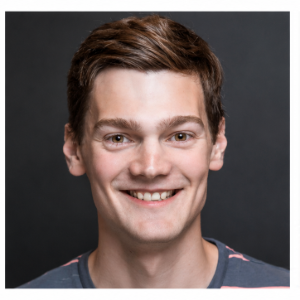
The George Pólya Prize in Mathematics is awarded every four years for a significant contribution, as evidenced by a refereed publication, in an area of mathematics of interest to George Pólya not covered by the George Pólya Prize in Applied Combinatorics or the George Pólya Prize for Mathematical Exposition.
Such areas may include approximation theory, complex analysis, number theory, orthogonal polynomials, probability theory, and mathematical discovery and learning. The prize is broadly intended to recognize specific recent work.
Duncan Dauvergne is an assistant professor in the Department of Mathematics of the University of Toronto. He received his Ph.D. from the University of Toronto (2019) and subsequently served as an instructor at Princeton University and a Natural Sciences and Engineering Research Council of Canada postdoctoral fellow. His research is in probability theory, with a focus on scaling limits in the KPZ universality class, random tilings, random sorting networks, and random polynomials. His honors include a Sloan fellowship and the 2023 Rollo Davidson Prize.
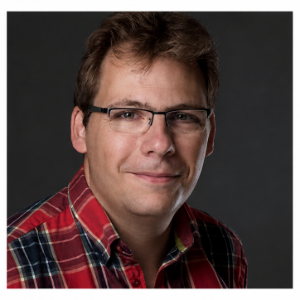
Janosch Ortmann is an associate professor in the Department of Analytics, Operations and Information Technology at the Université du Québec à Montréal and a member of the Group for Research in Decision Analysis (GERAD). He received his Ph.D. in mathematics from the University of Warwick, under the supervision of Neil O’Connell, working on random combinatorial objects and their connections to random matrix theory. He later held postdoctoral positions at the University of Toronto and the Centre de Recherches Mathematiques in Montreal. His current research spans stochastic processes, decision-making under uncertainty, machine learning, probabilistic modeling, and mathematical optimization, with applications ranging from computational biology to personalized medicine.
Bálint Virág is a professor of mathematics at the University of Toronto. After receiving his Ph.D. in statistics from the University of California, Berkeley (2000), he served as a C.L.E. Moore Instructor at the Massachusetts Institute of Technology. His research interests include random matrices, random polynomials, random walks, randomness in groups, first and last passage percolation, and KPZ universality. Since joining the University of Toronto in 2003, he has served as a Canada Research Chair (2003-13). He’s also received numerous honors including the CRM-Fields-PIMS Prize, the Coxeter James Prize, and the Rollo Davidson Prize, and is a fellow of the Institute of Mathematical Statistics and the Royal Society of Canada.
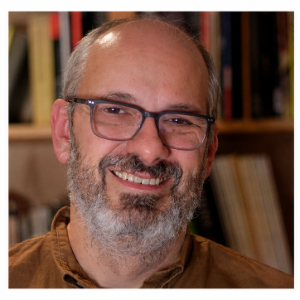
The authors collaborated on their answers to our questions.
Q: Why is your team excited to receive the award?
A: It is a great honor to receive the George Pólya Prize for our paper, “The directed landscape,” and join a very distinguished list of previous winners. It is especially meaningful to receive this recognition jointly, since the project grew out of a long and very collaborative effort to construct the universal scaling limit in the KPZ universality class. We’re also grateful that the award highlights a line of research that has benefited from many contributions across the probability community over the past thirty years, and that continues to generate new questions and connections with many other areas of mathematics.
Q: What does your work mean to the public?
A: Our work is foundational, in that it aims to understand the universal mathematical structures behind random growth and random geometry. While the models we study are often very specific, random planar geometry is an excellent framework for understanding many problems that are familiar to everyone, such as traffic flow or fire spread. Nonetheless, our interest is in identifying common large-scale laws that govern these phenomena, rather than in any single application. We hope that, beyond its mathematical value, the directed landscape helps illustrate a broader scientific idea: that very different complex systems can display the same hidden patterns when viewed at the right scale.
Q: Could you tell us about the research that won you the award?
A: The Kardar–Parisi–Zhang universality class describes a broad family of random one-dimensional interface growth models and random planar metric models. These models arise in many settings, including bacterial colony growth, forest fire spread, and the movement of ribosomes along mRNA. The central prediction is that large-scale behavior of these models follows universal laws, much as the normal distribution and Brownian motion arise as universal scaling limits in the Gaussian universality class.
Starting in the late 1990s, researchers discovered a handful of exactly solvable models in this class for which they could begin to take limits for certain statistics, revealing limiting objects like Tracy-Widom random variables, Airy processes, and the KPZ fixed point. Our contribution was to construct the directed landscape, which is the richest scaling limit in the KPZ universality class: a continuum random metric that contains these earlier limits as marginals and gives a unified framework for understanding the geometry of the class.
Q: What does being a member of SIAM mean to your team?
A: Although our work is theoretical, it is connected to applied probability, statistical physics, and the mathematical study of complex systems. For us, being part of SIAM means supporting a community that values both deep mathematical ideas and their connections to real-world phenomena. In probability especially, the boundary between pure and applied work is often very fluid: tools developed to understand universal scaling limits can also shape how we think about random growth, optimization, networks, and other models that arise in applications.
Interested in submitting a nomination for the George Pólya Prize in Mathematics? The prize next opens for nominations on May 1, 2029.
Adrian I. Nachman
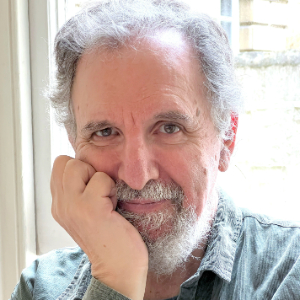
Dr. Adrian I. Nachman, University of Toronto, is the recipient of the 2026 Julian Cole Lectureship. He received the prize for his contributions to the mathematical foundations of imaging science and inverse problems, and the impact of his work on medical imaging. He will deliver a lecture at AN26 titled “A Nonlinear Plancherel Theorem, Dispersive Equations and the Inverse Problem of Calderón” on Wednesday, July 8 at 1:45 p.m.
Established in 1999, the Julian Cole Lectureship is awarded every four years to one individual for an outstanding contribution to the mathematical characterization and solution of a challenging problem in the physical or biological sciences, or in engineering, or for the development of mathematical methods for the solution of such problems.
Dr. Nachman received his Bachelor of Science degree, with honors in mathematics, from McGill University (1974), and a Ph.D. in mathematics from Princeton University (1980). He has taught at Yale University (1979-81) and the University of Rochester (1981-2001). Since 2001, he has been a professor at the University of Toronto.
Through his work on inverse problems, Dr. Nachman has made fundamental contributions to the field, solving several well-known open problems and introducing powerful, widely used methods. His work includes techniques from nonlinear harmonic analysis, partial differential equations, geometric measure theory, Riemannian geometry, and optimal transport theory, as well as collaborations with bioengineers on the application of his ideas to medical imaging. He is also a Fellow of the Royal Society of Canada and a Fields Institute Fellow.
Q: Why are you excited to receive the award?
A: I am honored and grateful to receive this award, as it celebrates the importance of deep rigorous analysis in applied medical imaging problems. It is a chance to express my heartfelt thanks to my many mentors, collaborators, students, and colleagues, without whom I would not have achieved this recognition.
Q: What does your work mean to the public?
A: I hope my work will lead to important diagnostic capabilities not currently available in medical imaging instruments and improved health outcomes.
There may be additional, unexpected impacts, as is often the case with work in mathematics. For instance, as part of a collaborative project on ultrasound imaging, I derived a novel differential equation to accurately model attenuation of acoustic propagation in biological tissues from first physical principles. Surprisingly, this paper from 36 years ago was recently cited in a publication on a major European project devoted to studying seismic waves on Venus, in which my approach was useful for computing the attenuation due to carbon dioxide and sulfuric acid in the atmosphere.
Q: Could you tell us about the research that won you the award?
A: Some of the work recognized by this prize was motivated by two research areas aimed at future generation medical diagnostic technologies: quantitative ultrasound imaging and electric tissue properties imaging. A fundamental inverse problem in partial differential equations, which had been unsolved for decades, was whether one can determine the variable speed of sound and density in a body from surface measurements of sound waves generated by point sources on the boundary. I was able to prove that measurements at two frequencies do indeed determine the speed of sound and the density, and in the case of constant density, one frequency suffices for recovering the sound speed.
I solved the problem constructively via a new integral equation which linked it to the inverse boundary value problem of Calderón. The latter asks whether one can determine the electric conductivity in a body from the corresponding voltage-to-current (Dirichlet-to-Neumann) map on the boundary. It is the fundamental question underlying electric impedance tomography. I proved that a nonlinear Fourier transform first introduced in the study of integrable partial differential equations could be calculated from the given Dirichlet-to-Neumann data. This provided a solution to the long open Calderón problem in dimension two.
In addition to my purely mathematical work, I have had decades of collaborations with bioengineering research groups on imaging from experimental data. One such project, based on current density measurements with MRI imagers, led to my interest on inverse problems involving functions of least gradient and minimal surfaces.
Q: What does being a member of SIAM mean to you?
A: I truly value being part of SIAM’s wonderful imaging sciences community. Interactions at SIAM conferences have played a crucial role at several stages of my career, as have SIAM journals.
Interested in submitting a nomination for the Julian Cole Lectureship? The prize next opens for nominations on May 1, 2029.
Fatih Dinc
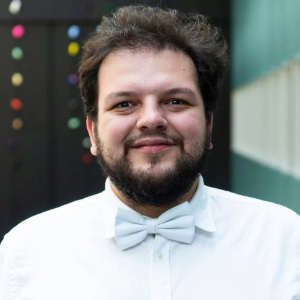
Dr. Fatih Dinc, University of California (UC), Santa Barbara, is the recipient of the 2026 Richard C. DiPrima Prize. He received the award for his Ph.D. dissertation entitled “Extracting fundamental principles of computation in the mammalian brain from large scale neural recordings,” which has developed a remarkable bridge between applied mathematics and neuroscience, with the intellectual traffic flowing in both directions.
The Richard C. DiPrima Prize is awarded every two years to one early career researcher who has done outstanding research in applied mathematics and who has completed his/her doctoral dissertation and completed all other requirements for his/her doctorate.
Dr. Dinc is a postdoctoral fellow at the Kavli Institute for Theoretical Physics at UC Santa Barbara. His research lies at the intersection of theoretical neuroscience, machine learning, and dynamical systems. He develops mathematical frameworks to understand how artificial and biological systems learn, compute, and represent information across scales. His interests include learning and memory in neural networks, reaction diffusion systems as models of morphogenesis and pattern formation, and the dynamical and geometric principles of neural computation that give rise to intelligence.
He received his Ph.D. in applied physics from Stanford University under the supervision of Dr. Mark Schnitzer, where he contributed to neuroscience systems by developing computational tools to probe neural computations in large scale recordings. Prior to Stanford, he completed his master’s studies in theoretical physics at the Perimeter Institute for Theoretical Physics and the University of Waterloo in Canada. He graduated as valedictorian from Bogazici University in Turkey and holds dual bachelor’s degrees in electrical and electronics engineering and physics. Learn more about Dr. Dinc.
Q: Why are you excited to receive the award?
A: I am deeply honored to receive this award and grateful that the committee found my research meaningful. Research programs take time, sustained momentum, and immense energy to develop, and there are many periods when progress feels slow, and self-doubt is unavoidable. This recognition is especially meaningful because it affirms that the long effort to build mathematically grounded approaches to understanding biological intelligence is resonating beyond my immediate field.
Q: What does your work mean to the public?
A: My work is driven by a very human curiosity about how intelligence works. Many of us wonder how the brain gives rise to thought, memory, and learning, and whether these processes can be understood in clear, principled terms that can be studied by mathematicians. By building theoretical frameworks for biological and artificial intelligence, I hope to contribute to a deeper understanding of ourselves while also helping shape technologies that increasingly influence everyday life.
Q: Could you tell us about the research that won you the award?
A: My Ph.D. research focused on using mathematical tools to extract new insights from large-scale neural recordings in order to understand how intelligent systems implement learning and memory. Under the supervision of Dr. Mark Schnitzer, I developed methods that help neuroscience researchers process calcium imaging datasets, which are simultaneous recordings of the activity of thousands to millions of individual neurons. These tools enabled researchers to keep pace with rapidly growing dataset sizes, contributing to our ability to ask experimental questions about neural computation at scales that were previously out of reach. Beyond tool development, my Ph.D. work introduced a theoretical framework for understanding how networks composed of many simple neurons can give rise to complex and stable computations while explaining empirical observations from systems neuroscience under common first principles. This framework addresses fundamental questions such as: How can circuits with vast numbers of neurons compute reliably despite ongoing changes in synaptic connections? How does low-dimensional neural code emerge from high-dimensional neural activity? What dynamical principles enable learning to occur rapidly while preserving stability? And how can we mathematically characterize the mechanisms that make neural computation robust over time?
Q: What does being a member of SIAM mean to you?
A: For me, SIAM represents an intellectual home that connects rigorous mathematics with ambitious scientific questions pursued across diverse disciplines. At the 2025 SIAM Conference on Applied Algebraic Geometry, I was struck by how elegantly other mathematicians reframed problems closely related to my own work. This experience has broadened my perspective and continues to shape my postdoctoral research.
Interested in submitting a nomination for the Richard C. DiPrima Prize? The prize next opens for nominations on May 1, 2027.
Nandi Leslie
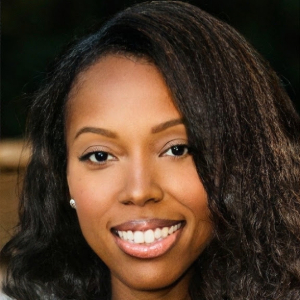
Dr. Nandi Leslie, RTX, is the recipient of the 2026 SIAM Industry Prize. She received the prize for advancing the frontiers of cybersecurity and network resilience. Her innovations represent non standard, mathematically sophisticated frameworks with real operational relevance. She will deliver a lecture at AN26 titled “Topological Data Analysis for Machine Learning-Based Network Intrusion Detection” on Monday, July 6 at 1:45 p.m.
The SIAM Industry Prize is awarded every year to an individual researcher or team who has made outstanding contributions to the effective application of mathematical sciences to industry. This work and its impact may be documented in letters that convey the significance and importance of the work, and/or peer reviewed papers, conference proceedings and/or patents.
Dr. Leslie is an applied mathematician, serving as a Principal Technical Fellow at RTX—this position is the highest technical honor for RTX employees. While serving in this position, she has held additional RTX roles for portfolios with up to $1.2B in value to RTX, including the Chief Data Scientist, Chief Engineer for the Raytheon Research & Development (R&D) portfolio, and Technical Solutions Director for Cybersecurity with global teams in the U.S., Europe, and the Middle East. She has strong R&D expertise and leadership in artificial intelligence, machine learning, and cybersecurity.
In addition to her current service as a Trustee on the Princeton University Board of Trustees, Dr. Leslie has served on numerous scientific boards and committees, including the National Academies of Sciences, Engineering, and Medicine (NASEM) Study on Biotechnology Capabilities for National Security Needs; the NASEM Army Board on Army R&D on AI and Justified Confidence Committee; the NASEM on AI Test and Evaluation for the Air Force Committee; the Howard University, Center of Excellence in AI and Machine Learning Advisory Board; and the SIAM Committee on Programs and Conferences.
Dr. Leslie has over 100 conference proceedings, patents, and publications, including journal articles, technical reports, and edited books. She received the 2020 BEYA Award for Outstanding Technical Contribution in Industry. Learn more about Dr. Leslie.
Q: Why are you excited to receive the award?
A: I’m excited to receive this award because it demonstrates to those interested in the mathematical sciences a commitment to computational and quantitative thinking can be recognized by the broader research and development community. I'm deeply grateful for SIAM's acknowledgement of my contributions in artificial intelligence, machine learning, and cybersecurity.
Q: What does your work mean to the public?
A: My work in the aerospace and defense industry helps address our customers' most challenging problems in sectors, such as commercial aviation and the military domain. I develop AI-based and other computational solutions to support robust and reliable autonomous vehicles and communications systems.
Q: Could you tell us about the research that won you the award?
A: My research focused on the intersection of machine learning, network resilience, and cybersecurity. I explored the role that unsupervised learning can play in understanding the adaptive patterns in network traffic and intrusion detection.
Q: What does being a member of SIAM mean to you?
A: Being a member of SIAM is invaluable because it provides a community of applied mathematicians to share research insights across a wide array of subfields. In addition, SIAM membership is rewarding because participation helps build a pipeline of shared knowledge in the mathematical sciences from undergraduate students to experts at the pinnacle of their professional careers.
Interested in submitting a nomination for the SIAM Industry Prize? The prize is currently accepting nominations until October 15, 2026.
Russel E. Caflisch
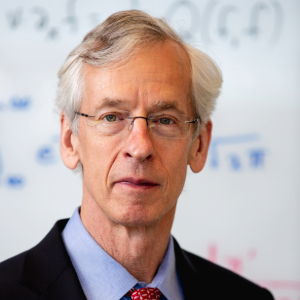
Dr. Russel E. Caflisch, Courant Institute of Mathematical Sciences, New York University, is the recipient of the 2026 SIAM Prize for Distinguished Service to the Profession. He received the award “in recognition of his outstanding leadership and service to applied and computational mathematics.”
SIAM awards the Prize for Distinguished Service every year to an applied mathematician who has made distinguished contributions to the furtherance of applied mathematics on the national or international level.
Dr. Caflisch is a professor of mathematics at the NYU Courant Institute School of Mathematics, Computing, and Data Science. Previously, he served as Courant’s Director (2017-25) and as Director of the Institute for Pure and Applied Mathematics (IPAM) at the University of California, Los Angeles (2008-17).
His research focuses on analysis and numerical methods for physical sciences. Examples include the fluid dynamic limit of the Boltzmann equation, singularities for vortex sheets in incompressible flow, mathematical modeling of epitaxial growth, and development of Monte Carlo methods for kinetic theory and finance.
Within the SIAM community, Dr. Caflisch has been an active leader and member for over 40 years. He has served as Editor-in-Chief for SIAM Journal on Multiscale Modeling and Simulation (2008-13), associate editor of SIAM Journal on Applied Mathematics (1989-94) and SIAM Journal on Financial Mathematics (2008-11), and a member of the following SIAM committees: Richard DiPrima Prize Committee (2001-02), SIAM Nominating Committee (2010-11), SIAM News Editorial Board (2013-14), SIAM Committee on Science Policy (2014), SIAM Board of Trustees (2014-20), SIAM Human Resources Committees (2016-25), SIAM Financial Management Committee (2018), and SIAM Annual Meetings Organizing Committee (2018). He was also named a 2009 SIAM Fellow.
Dr. Caflisch received a Hertz Graduate Fellowship and a Sloan Research Fellowship and was named a fellow of the American Mathematical Society and the American Academy of Arts and Sciences. He has been a member of the National Academy of Sciences since 2019 and served on its Board of Mathematical Sciences and Analytics (2019-25). Learn more about Dr. Caflisch.
Q: Why are you excited to receive the award?
A: This award is a great honor, and I am truly humbled by the recognition. I also see this as a tribute to my colleagues and to the wider mathematics community. I am excited for the opportunity to highlight the excellent work being done at IPAM and at the Courant Institute School, as well as the other NSF math institutes and organizations throughout the SIAM community.
Q: What does your work mean to the public?
A: Public outreach is vitally important for the applied math community. The public is eager to understand the amazing progress that is being made in mathematics and science, as well as how it contributes to weather prediction, energy production, medical imaging, and many other fields.
Q: Could you tell us about the research that won you the award?
A: During my time at IPAM and Courant, we held programs and research projects on many innovative areas of mathematics and its applications, such as compressed sensing, computational quantum mechanics, plasma fusion, combinatorial geometry, and AI. My role was to help enable the visiting researchers to perform breakthrough work on these topics. For example, IPAM’s combinatorial geometry program contributed to the recent solution of the Kakeya conjecture, which was also partly done at Courant; the traffic flow program highlighted the development of quantitative methods for assessment, prediction, and control of traffic flow; and the chemical compound space program promoted mathematical methods that have helped to identify and synthesize new and effective materials from the vast range of possibilities.
Q: What does being a member of SIAM mean to you?
A: I take great pride in my SIAM membership, as SIAM is the premiere organization for promoting applied mathematics in academia, industry, government and public consciousness. Its conferences, publications and programs have helped to connect me with fellow members and educators, and to enable and amplify my own research. I believe in SIAM’s mission, and I have seen how effective its outreach initiatives have been.
Interested in recommending someone for the SIAM Prize for Distinguished Service to the Profession? Suggest a recipient!
Anthony Michael Bloch
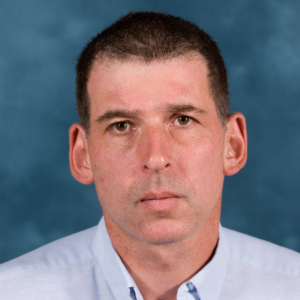
Dr. Anthony Michael Bloch, University of Michigan, is the recipient of the 2026 W. T. and Idalia Reid Prize. He received the prize for his deep scientific contributions to geometric mechanics and control theory, particularly for nonholonomic dynamics and control. He will deliver a lecture at AN26 titled “Rattlebacks, Spinning Tops, and Snakeboards: The Mathematics of Nonholonomic Mechanics and Control” on Monday, July 6 at 2:45 p.m.
The W. T. and Idalia Reid Prize is awarded annually to one individual for research in, or other contributions to, the broadly defined areas of differential equations and control theory.
Dr. Bloch is the Alexander Ziwet Collegiate Professor of Mathematics at the University of Michigan. He obtained a B.Sc. with honors in applied mathematics and physics from the University of the Witwatersrand in Johannesburg (1978), an M.S. in physics from the California Institute of Technology (1979), an M.Phil. in control theory and operations Research from Cambridge University (1981), and a Ph.D. in applied mathematics from Harvard University (1985). He began his academic career as a T. H. Hildebrandt Assistant Professor at the University of Michigan, and he returned to Michigan in 1994 after teaching at The Ohio State University for a few years. Dr. Bloch has served as the Graduate Chair and as Chair in the Department of Mathematics at Michigan and is currently an affiliate faculty member of the Center for Computational Medicine and Bioinformation.
His research interests include Hamiltonian and Lagrangian mechanics, geometric mechanics, nonholonomic systems and nonlinear control theory and integrable systems. Dr. Bloch’s many publications as an author and a co-author include academic papers and books, Nonholonomic Mechanics and Control and The Principle of Least Action. Additionally, he has served as Editor-in-Chief of the SIAM Journal on Control and Optimization and currently sits as co-Editor-in-Chief of the Journal of Nonlinear Science as well as a book series editor for Springer Applied Mathematics. Dr. Bloch’s speaking engagements include several plenary talks as well as the honor of being the inaugural lecturer of the Baillieul Distinguished Lecture Series in Mathematics and Statistics at the University of Massachusetts Amherst.
Dr. Bloch is a 2012 SIAM Fellow, with over 40 years as a member of SIAM, and is fellow of the American Mathematical Society and a Life Fellow of the Institute of Electrical and Electronics Engineers. He’s also a fellow of the International Core Academy of Sciences and Humanities and has been a senior fellow of the Michigan Society of Fellows on top of being a member of the Institute for Advanced Study. His awards recognition includes a Presidential Young Investigator award, a Guggenheim Fellowship, and a Simons Fellowship. Learn more about Dr. Bloch.
Q: Why are you excited to receive the award?
A: This award is especially meaningful to me on a personal level. Firstly, it is awarded for contributions in differential equations and control theory, the fields of mathematics in which I am most passionately interested. Secondly, this prize has previously been awarded to valued mentors and to colleagues of mine whom I greatly admire, and I feel extremely honored to be included among them in the list of prize winners. Finally, I am thrilled that the research and work I have done with so many wonderful mentors, colleagues, and students over the years has been recognized.
Q: What does your work mean to the public?
A: Many of the mathematical ideas that are intrinsic to my work have applications in science and technology in areas such as satellite control, the control and stabilization of robots, the control of quantum systems with applications to quantum computing, the control of complex biological networks including those that arise in stem cell analysis, and the analysis of various astrophysical systems including exoplanets and galaxies.
Q: Could you tell us about the research that won you the award?
A: Much of my research lies at the intersection of nonholonomic mechanics and control theory. The mathematics of nonholonomic systems is closely related to that of nonlinear control theory. I have also done related research on integrable Hamiltonian systems, on integrable nonholonomic systems, and on the mechanics, dynamics, and stability of various physical and technological systems.
Nonholonomic systems, mechanical systems with velocity constraints, are generalizations of Hamiltonian systems. Examples include wheeled vehicles and robots, shopping carts, rattleback tops, and ice skates. The mathematical properties of such systems are fascinating. For instance, in the absence of dissipation, while they do preserve energy, they do not necessarily preserve volume. Also, for such systems, symmetries do not always lead to conservation laws.
Q: What does being a member of SIAM mean to you?
A: Being a member of SIAM has meant a lot to me. I have benefited greatly from my association with this organization. Over the years I have attended many SIAM conferences including the SIAM Conference on Control and its Applications, the SIAM Conference on Applications of Dynamical Systems, and SIAM Annual Meeting. These well-organized events have provided me with enjoyable opportunities to meet and collaborate with my colleagues and to learn about cutting-edge research. I have had the pleasure of organizing several sessions, and it was at a SIAM Annual Meeting that I gave one of my first plenary talks. Also, it was an honor and a privilege to serve as the Editor-in-Chief of the SIAM Journal of Control and Optimization and to interact with the wonderful Board of Editors and the fantastic staff at SIAM.
Interested in submitting a nomination for the W. T. and Idalia Reid Prize? The prize is currently accepting nominations until October 15, 2026.
Máté L. Telek
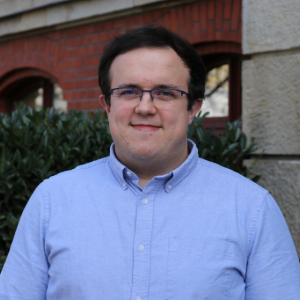
Dr. Máté L. Telek, Budapest University of Technology and Economics, is one of the recipients of the 2026 SIAM Student Paper Prize. He received the award for his paper, “Geometry of the Signed Support of a Multivariate Polynomial and Descartes’ Rule of Signs”. The paper was published in SIAM Journal on Applied Algebra and Geometry, Vol. 8 (4), pp. 968 - 1000 (2024).
He will be recognized at AN26 and will present the paper in a dedicated session on Wednesday, July 8 at 8:00 a.m. ET.
The SIAM Student Paper Prize is awarded annually to the student author(s) of the most outstanding paper(s) accepted by SIAM journals within the three years preceding the nomination deadline. The award is based solely on the merit and content of the student's contribution to the submitted paper. Up to three awards are made every year.
Dr. Telek is an assistant professor in the Department of Algebra and Geometry at the Budapest University of Technology and Economics. He received his Ph.D. in 2024 from the University of Copenhagen, under the supervision of Elisenda Feliu. Prior to relocating to Budapest, he was a postdoc at the Max Planck Institute for Mathematics in the Sciences in the Nonlinear Algebra group under the supervision of Bernd Sturmfels, and a Marie Curie Postdoctoral Fellow at Leipzig University, working with Rainer Sinn. His research focuses on real algebraic geometry, tropical geometry, and their applications, particularly in particle physics and biochemical reaction networks. Learn more about Dr. Telek.
Q: Why are you excited to receive the award?
A: 2022 SIAM Annual Meeting was one of the first conferences I attended, and it was very inspiring to see that year's award recipients. Now it’s four years later and I feel extremely honored to receive the SIAM Student Paper Prize. It is rewarding to see that hard work and dedication pay off, and that the research direction we are pursuing is valued by a broader community. In this regard, I would especially like to thank my Ph.D. supervisor, Elisenda Feliu, who introduced me to this research area and whose guidance and support made this achievement possible.
Q: What does your work mean to the public?
A: Scientific models are often described by polynomial equations and inequalities. Because these models represent real-life quantities such as masses of elementary particles, population sizes, or chemical concentrations, only solutions consisting of positive real numbers are typically relevant for the modeled phenomena.
A major challenge is that the mathematical algorithms used to study these real solutions are often too computationally expensive in theory. However, many real-world problems are much more structured than the difficult worst-case examples typically considered in mathematics. My research focuses on bridging this gap between theory and practice by developing efficient algorithms that take advantage of the special structure of applied problems.
In the long term, this work can help scientists and engineers analyze models more efficiently and accurately, leading to faster discoveries across fields, ranging from natural sciences to engineering and data science.
Q: Could you tell us about the research that won you the award?
A: The central research question of my Ph.D. project was motivated by the study of multistationarity in biochemical reaction networks.
This problem led us to investigate multivariate generalizations of the classical Descartes' Rule of Signs. While the univariate version of Descartes' Rule dates back to 1637, relatively little is known in the multivariate setting.
In the paper selected for the SIAM Student Paper Prize, I investigated how the combinatorial structure of a polynomial's exponents and coefficients determines the topology of its zero set in the positive real orthant. The results not only provide partial generalizations of Descartes' Rule of Signs but also yield effective methods for studying the multistationarity regions of biochemical reaction networks.
Q: What does being a member of SIAM mean to you?
A: Being a SIAM member is very important to me. Being part of the community and attending SIAM conferences have played a significant role in my scientific development and in helping me discover my current research field. In particular, I would like to highlight the SIAM Activity Group on Algebraic Geometry, where I truly found a professional home. Meeting the researchers in this community has been deeply inspiring and has greatly influenced my scientific growth. I hope that in the future I can continue to be an active member of the community, both benefiting from its support and contributing to its further development.
Interested in submitting a nomination for the SIAM Student Paper Prize? The prize next opens for nominations on September 15, 2026.
Aimee Maurais
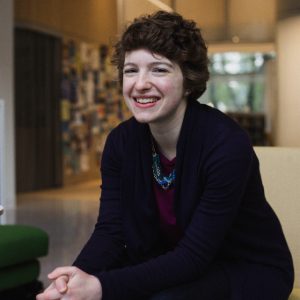
Dr. Aimee Maurais, Massachusetts Institute of Technology (MIT), is one of the recipients of the 2026 SIAM Student Paper Prize. She received the award for her paper, “Multifidelity Covariance Estimation via Regression on the Manifold of Symmetric Positive Definite Matrices”. The paper was co-written with Terrence Alsup, Benjamin Peherstorfer, and Youssef M. Marzouk, and published in SIAM Journal on Mathematics of Data Science, Vol. 7 (1), pp. 189 – 223 (2025).
She will be recognized at AN26 and will present the paper in a dedicated session on Wednesday, July 8 at 8:00 a.m. ET.
The SIAM Student Paper Prize is awarded annually to the student author(s) of the most outstanding paper(s) accepted by SIAM journals within the three years preceding the nomination deadline. The award is based solely on the merit and content of the student's contribution to the submitted paper. Up to three awards are made every year.
Dr. Maurais completed her Ph.D. in computational science and engineering at MIT in May 2026, and in August 2026, she will join Cornell University as an NSF Mathematical Sciences Postdoctoral Research Fellow. Prior to beginning her graduate work, Aimee earned bachelor’s degrees in mathematics and computational modeling & data analytics from Virginia Tech and spent a year and a half on the technical staff of the MIT Lincoln Laboratory. Learn more about Dr. Maurais.
Q: Why are you excited to receive the award?
A: I presented an early version of this work at my first in-person conference of graduate school, the 2022 SIAM Conference on Uncertainty Quantification (UQ22). Now that I’ve completed my Ph.D., it’s fun to come full-circle and present it again at AN26 as part of receiving this award.
Q: What does your work mean to the public?
A: Very accurate, or high fidelity, computational models of physical systems we need to simulate—like atmospheric physics or airflow over an airplane wing—are usually very expensive to run on a computer, which limits the number of times we can evaluate them in order to make predictions under uncertainty. Less accurate, or low fidelity, models are cheaper but may not resolve important physical phenomena. Our work introduces a geometrically grounded method for combining both high- and low-fidelity models in order to enable accurate uncertainty quantification at a manageable computational cost.
Q: Could you tell us about the research that won you the award?
A: In our paper we introduce a regression-based framework for multifidelity estimation of objects, like covariance matrices, which reside on Riemannian manifolds. Our approach enables more accurate estimation of these objects for a given computational budget by combining models of multiple fidelities and naturally preserving important structural properties, like positive definiteness, in the final estimates.
Q: What does being a member of SIAM mean to you?
A: SIAM is a great community that has played a huge role in my professional development. One reason why I decided to pursue a Ph.D. was due to a positive experience I had as an undergraduate at the 2019 SIAM Conference on Computational Science and Engineering. Attending SIAM conferences was a highlight of my graduate school career, and I look forward to being a SIAM member for years to come!
Interested in submitting a nomination for the SIAM Student Paper Prize? The prize next opens for nominations on September 15, 2026.
Konstantin Riedl
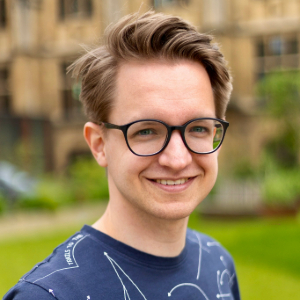
Dr. Konstantin Riedl, University of Oxford, is one of the recipients of the 2026 SIAM Student Paper Prize. He received the award for his paper, “Consensus-Based Optimization Methods Converge Globally”. The paper was co-written with Massimo Fornasier and Timo Klock and published in SIAM Journal on Optimization, Vol. 34 (3), pp. 2973 – 3004 (2024).
The SIAM Student Paper Prize is awarded annually to the student author(s) of the most outstanding paper(s) accepted by SIAM journals within the three years preceding the nomination deadline. The award is based solely on the merit and content of the student's contribution to the submitted paper. Up to three awards are made every year.
Dr. Riedl is a Postdoctoral Research Associate in deep learning at the Mathematical Institute of the University of Oxford, and a Research Fellow in artificial intelligence & machine learning at Reuben College. He obtained his doctoral degree (Dr. rer. nat.) in mathematics from the Technical University of Munich, summa cum laude in 2024, with a dissertation on the mathematical foundations of interacting multi-particle systems for optimization.
His research interests lie in applied mathematics, specifically machine learning, data analysis, optimization, scientific computing, and their interfaces. He focuses on the design as well as the mathematical and numerical analysis of algorithms and methods used in these areas, with a specific focus on scientific machine learning and large language models. To elucidate their often-intricate behavior, he employs tools from applied and numerical analysis, applied probability, the analysis of partial differential equations, stochastic analysis and calculus, along with numerical simulations. Learn more about Dr. Riedl.
Q: Why are you excited to receive the award?
A: First and foremost, I am excited to see our work being recognized by the SIAM community in such a meaningful way. It's a real validation of our work, which has laid the mathematical foundations of interacting multi-particle systems for optimization and beyond.
Q: What does your work mean to the public?
A: Interacting multi-particle systems are of paramount importance in and beyond applied mathematics, with far-reaching impact across a variety of scientific disciplines.
While they describe physical movements of atoms and molecules in molecular dynamics, collective behavior of animal groups in nature, and even the dynamics of opinion formation in social networks, more recently, these mathematical interpretations have become essential for understanding optimization algorithms as well as modern machine learning algorithms. For instance, they enable us to model as well as analyze how tokens cluster within transformer architectures and allow us to design as well as investigate effective particle-based systems for challenging, non-convex optimization problems. Our work develops fundamental techniques required to rigorously analyze such systems.
Q: Could you tell us about the research that won you the award?
A: Nonconvex optimization problems are ubiquitous across science and technology, appearing whenever models must capture complex real-world phenomena involving nonlinear interactions and structural constraints. Due to the inherent difficulty of these problems, rigorous mathematical results typically guarantee that suitable iterative algorithms reach suboptimal local solutions only.
Our work provides a rigorous mathematical analysis for consensus-based optimization (CBO)—a powerful, multi-agent, derivative-free method capable of global minimization. Inspired by particle swarm optimization and simulated annealing, CBO balances stochastic exploration and exploitation through a contraction toward a consensus point. By taking a mean-field perspective and utilizing ideas from statistical mechanics, we analyze the macroscopic behavior of these optimization dynamics. Ultimately, this framework has served as a cornerstone for expanding our understanding of other crucial optimization methods, including evolution strategies and, remarkably, even stochastic gradient descent.
Q: What does being a member of SIAM mean to you?
A: SIAM's dedication to curating several top-tier journals in all of applied mathematics is invaluable for the community and much appreciated. By organizing several conferences throughout the year, SIAM complements this by creating the necessary platforms for disseminating research as well as spaces for the community to meet and exchange ideas.
Interested in submitting a nomination for the SIAM Student Paper Prize? The prize next opens for nominations on September 15, 2026.
Ondrej Maxian
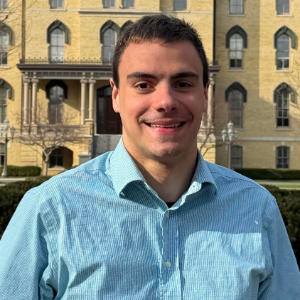
Dr. Ondrej Maxian, University of Notre Dame, is the recipient of the 2026 SIAM Activity Group on Life Sciences Early Career Prize. He received the award “for foundational contributions to computational cell biology, encompassing mechanics of the cytoskeleton and systems of mechanochemical feedback that encode dynamically stable cell polarity.”
He will be recognized at the 2026 SIAM Conference on the Life Sciences (LS26), taking place July 6-9, 2026. He will deliver a talk on Thursday, July 9 at 1:45 p.m. titled, “Understanding Self-organization in the Cell Cytoskeleton with Simulation-based Inference.”
The SIAM Activity Group on Life Sciences Early Career Prize is awarded every two years to one individual in their early career, in the field of mathematics applied to the life sciences, for distinguished contributions to the field in the three calendar years prior to the award year.
Dr. Maxian has been an Assistant Professor in the Department of Applied and Computational Mathematics and Statistics at the University of Notre Dame since January 2026. Prior to this, he received training in both applied math and cell biology. His Ph.D. studies were completed at the Courant Institute at New York University (2018-23), where he primarily worked on numerical methods for filament suspensions under the direction of Aleks Donev and Alex Mogilner. He then pivoted to a more biological focus, completing a postdoc at the University of Chicago (2023-25). His primary advisor, Ed Munro, was in the Department of Molecular Genetics and Cell Biology and taught him the basics of experimental design and data analysis. Learn more about Dr. Maxian.
Q: Why are you excited to receive the award?
A: I hope this award will make me a more recognizable part of the community. There are so many greats in the field of computational cell biology who I have yet to meet, and the plenary talk represents an opportunity to introduce myself to them and others. I am also looking to build new collaborations with experimentalists and other mathematicians interested in modeling the cell. By making comparisons between models and data more quantitative, I think we can work together to uncover the key principles behind cellular organization.
Q: What does your work mean to the public?
A: My work uses a combination of data analysis and mathematical modeling to learn how cells pattern their proteins at or near the membrane. Among other functions, protein patterning on the membrane plays a key role in neurological signaling, immune responses to foreign pathogens, and fertilization of egg cells. Understanding the general principles behind patterning can improve our knowledge of these important systems, as well as expand our basic knowledge of how cells work.
Q: Could you tell us about the research that won you the award?
A: My early career research is based on developing new numerical methods to study the key components of the cell cytoskeleton, then deploying those methods to learn how cell-scale order can emerge from molecular-scale constituents and rules of interaction. The main contribution to life sciences is the close synergy between experiments and data. For example, my most recent work looked at pattern formation in a two-component system comprising activator protein RhoA and its inhibitor, filamentous actin. By formulating a mathematical model of the dynamics, then comparing the statistical outputs of the model to the corresponding experimental data, I was able to assign model parameters to different types of cells. This allowed me to discern how cells can organize different patterns of RhoA activity on the membrane by tuning the molecular-scale parameters, F-actin kinetics.
Q: What does being a member of SIAM mean to you?
A: Being a member of SIAM gives me the opportunity to connect with other members of my home community: applied mathematicians interested in computational science and biology. Whether attending SIAM CSE conferences or SIAM Life Sciences, I have been fortunate to get new ideas from my colleagues’ presentations, share meals with friends, and form new collaborations. This gives me the chance to appreciate the personal part of the work we do.
Interested in submitting a nomination for the 2026 SIAM Activity Group on Life Sciences Early Career Prize? The prize next opens for nominations on May 1, 2027.
Ashesh Chattopadhyay
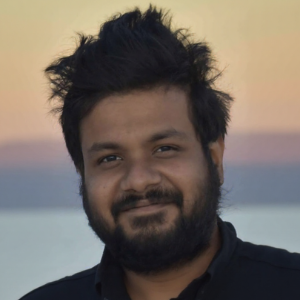
Dr. Ashesh Chattopadhyay, University of California, Santa Cruz, is the recipient of the 2026 SIAM Activity Group on Mathematics of Planet Earth Early Career Prize. He received the award “for his contributions to understanding and improving scientific machine learning approaches for data-driven prediction of atmospheric, oceanic, and engineered turbulent flows.”
He will be recognized at the 2026 SIAM Conference on Mathematics of Planet Earth (MPE26), taking place July 6-8. Dr. Chattopadhyay will deliver a talk on Monday, July 6 at 11:45 a.m. titled, “Theory and Scaling in AI for Multi-scale Dynamics.”
The SIAM Activity Group on Mathematics of Planet Earth Early Career Prize is awarded every two years to an outstanding early career researcher in the field of Mathematics of Planet Earth for distinguished contributions to the field in the six calendar years prior to the award year.
Dr. Chattopadhyay is an assistant professor in the Department of Applied Mathematics at the University of California, Santa Cruz (UCSC), where he leads the Theoretical and Applied Complex Systems (TACS) Lab. He completed his Ph.D. at Rice University, his M.S from the University of Texas, El Paso, and his B. Tech from the Indian Institute of Technology, Patna. Before joining UCSC in 2023, he served as a staff scientist at Xerox Palo Alto Research Center and Stanford Research Institute. His research spans the intersection of theoretical deep learning, dynamical systems, and computational physics, with a specific focus on modeling the Earth system. He was recently named a 2026 Sloan Research Fellow and received the 2025 American Physical Society Topical Group on the Physics of Climate Early Career Investigator Award. Learn more about Dr. Chattopadhyay.
Q: Why are you excited to receive the award?
A: I am excited about this award because it highlights the impact that mathematics and AI can have together in advancing our ability to understand and predict large-scale complex systems such as the Earth’s atmosphere and oceans.
Q: What does your work mean to the public?
A: My work focuses on improving how we use AI and mathematics to model and predict complex Earth systems such as the atmosphere and oceans. More accurate and reliable predictions can help society better prepare for extreme events, improve weather and climate forecasting, and ultimately, support decision-making related to climate, infrastructure, and public safety.
Q: Could you tell us about the research that won you the award?
A: My research focuses on understanding both the capabilities and the failure modes of machine learning models when they are used to predict complex dynamical systems such as turbulent flows in the atmosphere and ocean. While AI has shown tremendous promise for accelerating scientific simulations, these models often struggle with issues such as spectral bias, where they fail to capture fine-scale dynamics, and stability problems that cause predictions to diverge over long-time horizons. My work develops mathematical frameworks to analyze these limitations and design new machine learning architectures and training strategies that mitigate them. By combining insights from theoretical deep learning, dynamical systems, physics, and numerical analysis, this research helps build AI models that are not only accurate, but also physically consistent and stable for long-term prediction of complex geophysical flows.
Q: What does being a member of SIAM mean to you?
A: Being a member of SIAM means being part of a community that values deep mathematical thinking while remaining closely connected to real-world problems. SIAM has long played a central role in bringing together mathematicians, scientists, and engineers working at the interface of theory and application. For me, it represents a community where rigorous mathematics can directly contribute to advances in areas such as Earth science, fluid dynamics, and scientific machine learning.
Interested in submitting a nomination for the SIAM Activity Group on Mathematics of Planet Earth Early Career Prize? The prize next opens for nominations on May 1, 2027.
Freddy Bouchet
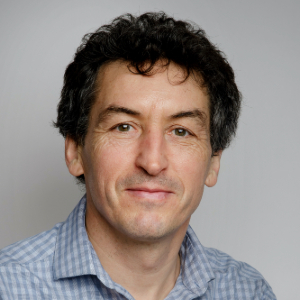
Dr. Freddy Bouchet, Centre National de la Recherche Scientifique (CRNS) and École normale supérieure (ENS) – PSL, is the recipient of the 2026 SIAM Activity Group on Mathematics of Planet Earth Prize. He received the award “for developing rare event sampling algorithms for weather extremes such as heatwaves. These algorithms robustly and efficiently determine the rarest such events and enable mechanistic analysis.”
He will be recognized at the 2026 SIAM Conference on Mathematics of Planet Earth (MPE26), taking place July 6 - 8, 2026. Dr. Bouchet will deliver a talk on Tuesday, July 7 at 11:30 a.m. titled, “New Mathematics and Statistical Physics for Climate Extremes: Theory, Algorithms, and Applications.”
The SIAM Activity Group on Mathematics of Planet Earth Prize is awarded every two years to one individual for significant scientific work in topic areas that are relevant to the mathematics of planet earth or for sustained or seminal contributions to the scientific agenda of the SIAM Activity Group on Mathematics of Planet Earth.
Dr. Bouchet is a physicist and climate scientist, research director at CNRS, and affiliated professor at ENS, in France. He has served as the director of Laboratoire de Météorologie Dynamique (LMD/IPSL) since 2025. A former student of ENS – Lyon, he earned the French agrégation in mathematics and holds a DEA and a Ph.D. in theoretical physics from Joseph Fourier University. Since 1998, he has been a leader in the application of statistical physics to climate science. As a specialist in rare events in complex dynamical systems, he has made major contributions to statistical physics and large deviation theory with applications in turbulence, astronomy, and climate science. His work has led to the development of new mathematical tools and algorithms for studying extreme climate events and climate tipping points, as well as the resilience of electric power systems.
Beyond his scientific achievements, Dr. Bouchet founded the interdisciplinary research network “Theoretical Challenges for Climate Science” (GDR), contributed to the creation of the Institute of Mathematics for Planet Earth, coordinates the RTE–Institut Pierre Simon Laplace (IPSL) framework agreement on power system resilience, and leads the IPSL initiative on artificial intelligence and climate. He has also advised numerous groups and policymakers on climate adaptation, climate mitigation, and energy transition.
Q: Why are you excited to receive the award?
A: Since my Ph.D., I have devoted my research to building new theoretical frameworks and algorithms capable of studying phenomena that existing tools simply could not reach using statistical physics. I am genuinely thrilled to receive this award — it feels like a validation of the directions I committed to more than 25 years ago, and it is deeply gratifying to see them prove useful to a whole community. It is especially meaningful that this recognition comes for my most recent, applied work, since that work draws so directly from the mathematical foundations laid much earlier.
Q: What does your work mean to the public?
A: Together with my collaborators, I developed algorithms that allow us to study the probability and impact of unprecedented extreme climate events and tipping points — the very phenomena that matter most when it comes to understanding what climate change means for our present and our future. These are also the questions at the core of the two challenges we must face: adaptation and mitigation. In that sense, our work feeds directly into the policy decisions driving the energy and ecological transitions, and into the broader question of how our societies will need to reorganize themselves.
Q: Could you tell us about the research that won you the award?
A: Simulating the most impactful climate events with the best available climate models seems out of reach: the events are too rare, and the models too expensive to run. The key idea is to simulate ensembles of possible trajectories, pruning those that move away from extremes, and duplicating those that draw closer to them. Making this simple and classical idea work with the complex, realistic dynamics of climate models turned out to require progress on multiple fronts: new mathematics for stochastic processes, a genuine understanding of the fluid mechanics at play, new machine learning tools for designing efficient selection rules, and the practical implementation of all of this within demanding climate model computations.
Q: What does being a member of SIAM mean to you?
A: Mathematics never ceases to fascinate me: it is a space for creative thinking, yet one tightly constrained by the physical world; a light shed on phenomena; and a language that can prove extraordinarily useful. It is also, at heart, a deeply social endeavor — one that flourishes within collective organizations like SIAM.
Interested in submitting a nomination for the SIAM Activity Group on Mathematics of Planet Earth Prize? The prize next opens for nominations on May 1, 2027.
Related Reading
Stay Up-to-Date with Email Alerts
Sign up for our monthly newsletter and emails about other topics of your choosing.