
2026 June Prize Spotlight
Congratulations to SIAM prize recipient, Patrick Farrell, who will be recognized at Scientific Computing and Differential Equations 2026 (SciCADE), taking place June 29-July 3, 2026, in Edinburgh, United Kingdom.
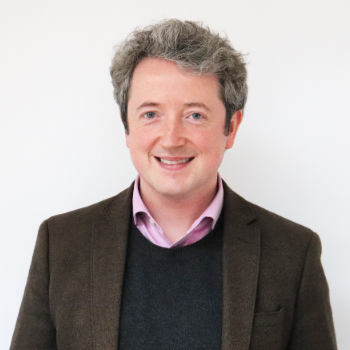
Dr. Patrick Farrell, University of Oxford and Charles University, is the recipient of the 2025 Germund Dahlquist Prize. Dr. Farrell received the award for his broad, creative, and groundbreaking contributions to numerical solutions of partial differential equations, and the design and analysis of algorithms and software for scientific computing. He will deliver a lecture at SciCADE 2026 titled “Enforcing conservation laws and dissipation inequalities numerically via auxiliary variables."
The Germund Dahlquist Prize is awarded every two years to one individual for original contributions to the numerical solution of differential equations and numerical methods for scientific computing.
Dr. Farrell is a professor in the numerical analysis group at the University of Oxford, and the Donatio Universitatis Carolinæ Chair in the faculty of mathematics and physics at Charles University in Prague for 2025-2026. His research interests are in the numerical solution of partial differential equations (PDEs) arising in physics and chemistry. He is also employed as a specialist consultant at the UK Atomic Energy Authority.
Dr. Farrell obtained his bachelor’s degree in mathematics from the University of Galway, and his doctorate from Imperial College London in 2010. His doctoral thesis won the Roger Owen prize from the UK Association for Computational Mechanics and the Janet Watson prize from Imperial. He has been awarded an Engineering and Physical Sciences Research Council Early Career Research Fellowship (2013-2018), the 2015 Wilkinson Prize for Numerical Software, second place in the 2015 Leslie Fox Prize in Numerical Analysis, the 2021 Charles Broyden Prize in optimization, and the 2021 Whitehead Prize from the London Mathematical Society. In 2026, he will give an invited lecture at the International Congress of Mathematicians. Dr. Farrell is an associate editor for the SIAM Journal on Scientific Computing and a member of the SIAM Activity Group on Computational Science and Engineering Early Career Prize selection committee. He has been a SIAM member for 13 years and is a 2026 SIAM Fellow. Learn more about Dr. Farrell.
Q: Why are you excited to receive the award?
A: This award holds very special meaning for me, since Dahlquist made such fundamental contributions to the numerical analysis of differential equations. Throughout my career, I've tried to weave together developments in fundamental algorithms with applications in science, just as Dahlquist did with numerical weather prediction. This award is a real validation of my work and I'm very grateful to the committee for selecting me.
Q: What does your work mean to the public?
A: Many important questions in science and engineering are investigated using partial differential equations, the language in which the laws of physics are usually written. These models are used to understand and predict the behavior of systems such as the climate, the flow of air around aircraft, the design of medical devices, the behavior of new materials, and the generation and distribution of energy. My work focuses on developing the mathematical algorithms and software that allow researchers to solve these models accurately, efficiently, and reliably. While this work is often several steps removed from a final application, improvements in the underlying computational tools can benefit a wide range of fields simultaneously. A new algorithm or software capability developed for one problem often helps scientists and engineers tackle many others.
Q: Could you tell us about the research that won you the award?
A: I've worked on several different themes within the numerical solution of partial differential equations. One theme of my work has been the development of methods for computing multiple solutions of nonlinear partial differential equations and their use in numerical bifurcation analysis, which helps us understand how qualitative changes in behavior arise as parameters vary.
A second theme has been adjoint methods and PDE-constrained optimization. These techniques allow us to efficiently compute sensitivities and gradients in large-scale simulations, making it possible to solve optimization, inference, and control problems that would otherwise be computationally infeasible.
A third theme has been the development of time discretizations that preserve conservation laws and dissipation inequalities. For example, the compressible Navier-Stokes equations conserve mass, momentum, and energy, and dissipate entropy; with great care it is possible to preserve all of these properties simultaneously on discretization.
A final theme has been scientific software. I have been involved in the development of software systems like Firedrake that allow researchers to express mathematical models at a high level while automatically generating efficient numerical implementations. The goal is to make advanced computational methods more accessible, reproducible, and easier to apply across scientific disciplines.
Q: What does being a member of SIAM mean to you?
A: SIAM has played an important role throughout my career because it brings together people who care about both mathematical ideas and their practical impact. Scientific computing sits at the intersection of mathematics, computation, engineering, and the sciences, and SIAM provides a wonderful community where those different perspectives can meet and learn from one another.
Due to schedule disruptions from the COVID-19 pandemic, the Germund Dahlquist Prize was out of sync with the SciCADE conference. The prize will be re-aligned with the SciCADE meeting schedule beginning in 2028.
Interested in submitting a nomination for the Germund Dahlquist Prize? The prize will next open for nominations on May 1, 2027.
Related Reading


Stay Up-to-Date with Email Alerts
Sign up for our monthly newsletter and emails about other topics of your choosing.